Interview: Yoshitaka Amano Talks ZAN
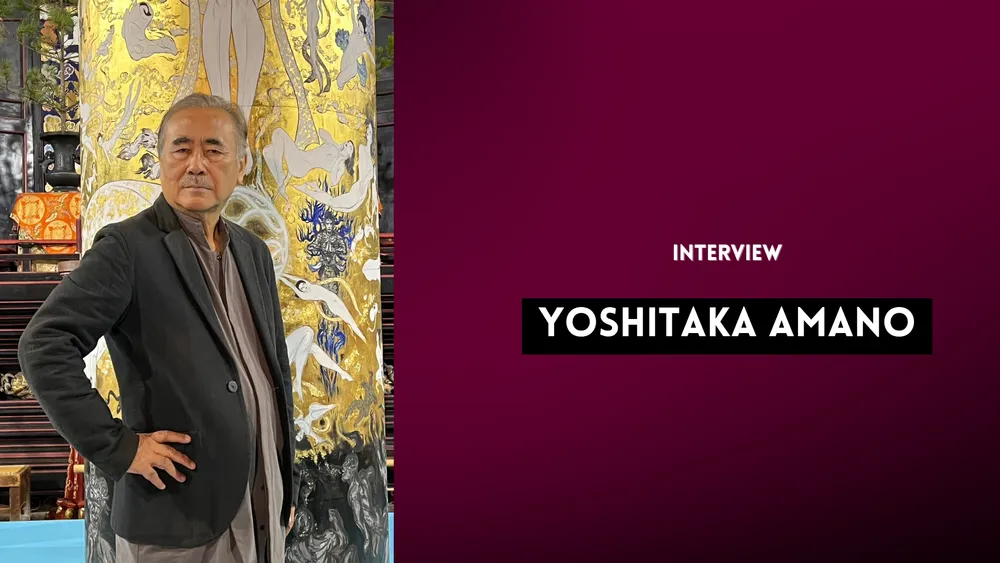
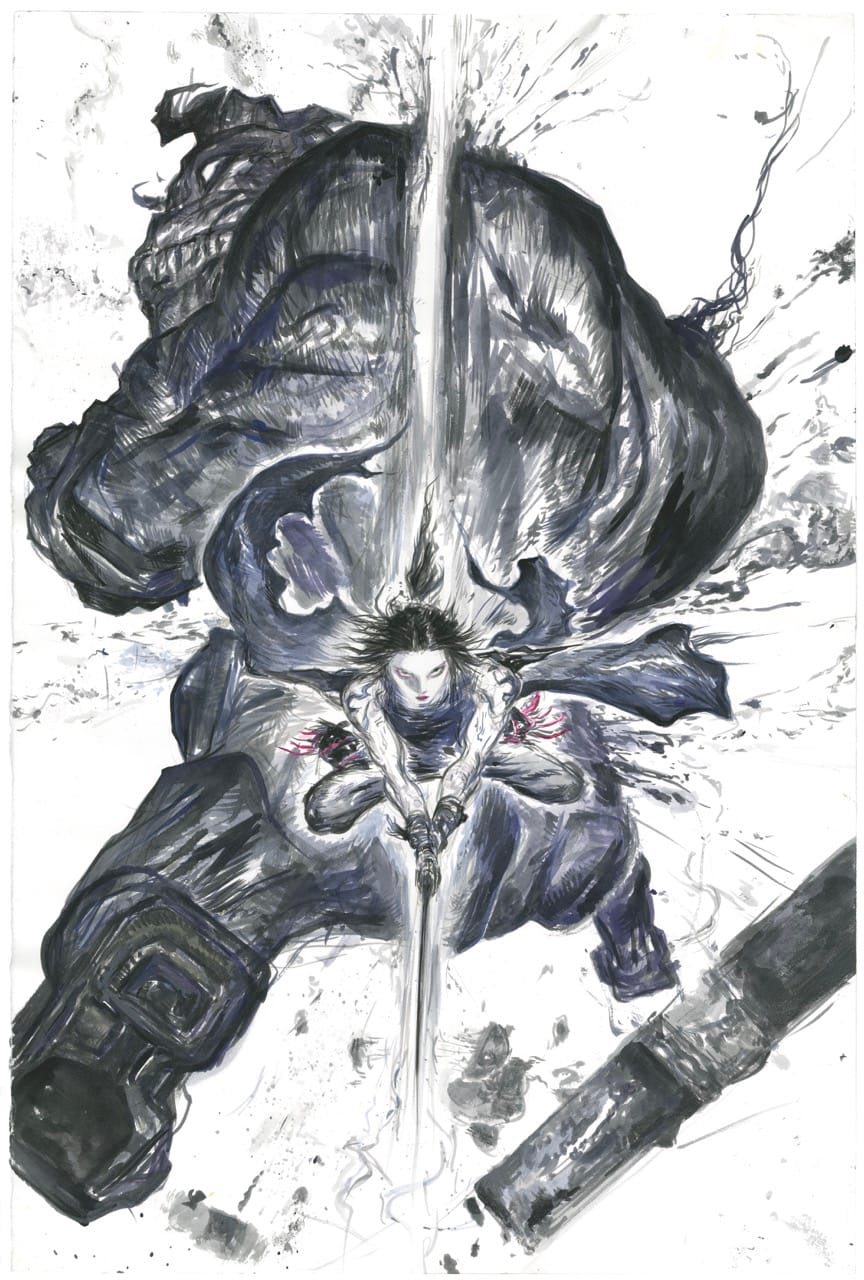
Anime Atelier had the chance to do an interview with artist Yoshitaka Amano (天野喜孝) about his upcoming ZAN animated project helmed by the veteran staff of studio Anime R and their associates. The new project is a continuation of the DEVA ZAN pilot film made in 2010, in which Amano served as chief director, its subsequent novelized version in 2013, and the ZAN manga started in 2019.
Amano is a manga and anime industry veteran who started his work in the late 1960s and made his mark in the 1970s through the Tatsunoko Production original sci-fi and superhero works like Gatchaman, Tekkaman, Hurricane Polymar, Time Bokan, and Yatterman. His career expanded through works with overseas publishers like DC and Marvel Comics, co-created Angel's Egg (1985) with director Mamoru Oshii, and has contributed extensively to the Final Fantasy game series as its original character designer.
Q: Thank you for taking the time to answer our questions. First off, you revealed quite a few big things during Anime Expo '26. The most exciting of these is probably the ZAN pilot film. Can we learn a bit more about your decision to turn this project into an anime?
Amano: I think the time had finally come. The worldview of DEVA ZAN had remained within me for many years, but at just the right moment, anime creators gathered around me who genuinely wanted to make this work together. With that fortunate alignment of people and timing, I felt we were ready to bring ZAN to life as an anime.
Q: The DEVA ZAN project began in 2010. Did you always plan for it to develop in this direction? Should we expect an adaptation or an expansion of the world?
Amano: When I first developed DEVA ZAN, I already saw it as a broad world with the potential to grow, although its exact form was not fixed from the beginning. The anime is not simply a direct adaptation of the original art project; it is an expansion of that world into a new form of expression. Starting from the art, I hope ZAN can continue to develop through a variety of projects.
Q: Where did the general idea for the DEVA ZAN world come from?
Amano: ZAN and his partner Panther are figures I have repeatedly drawn in my original work over the years. ZAN became the culmination of the dark-fantasy hero imagery that had long existed within me. The world of DEVA ZAN grew naturally around those characters and my desire to create a free story that crosses time and space.
Q: The ZAN anime project managed to gather quite a few big names. Could you tell us a bit more about how this creative team came together for the production?
Amano: The team came together very naturally. These renowned creators gathered because each of them genuinely wanted to make this work with me. I believe collaboration is extremely important, so we are building ZAN together, with each person bringing the best of their creativity while we continue to refine and align the worldview of the work.
Q: If an opportunity arises to go from limited anime series to full-length format, would you be open to exploring it?
Amano: Yes, I would be open to it. For now, our focus is on developing ZAN as a limited anime series, but I want the project to grow globally as an entertainment work that begins with art. If the right opportunity and creative team came together, I would be happy to explore other formats.
Q: The ZAN pilot highlights the importance of hand-drawn animation. Why did you pick this specific message for such an important video?
Amano: I wanted to reaffirm that animation is something born from the human hand. Because I am an artist who draws, it was important to state that resolve clearly at the beginning of the pilot. Hand-drawn artwork can feel especially new in the era we are living in now. At the same time, I am not rejecting digital tools; we will use them where they are needed while continuing to value the power of the human line.
Q: What do you think about the use of generative artificial intelligence that is slowly taking over not only our social media feeds but also the artistic spaces?
Amano: AI cannot create a one from a zero, but human beings can. People will continue to imagine and create things that did not exist before, and I believe that power must be cherished. Generative AI can help or harm depending on the person using it, but it should not replace the originality and human sensibility at the source of a work.
Q: What was the main idea behind Yoshitaka Amano Inc.? Why base it in LA and not Japan?
Amano: I wanted to create my own original work freely and to build a new kind of entertainment business in which business grows out of art itself. We call that concept ‘ART & ENTERTAINMENT.’ Los Angeles gives us a base from which to connect with creators and audiences internationally and send new projects out into the world. I also believe Southern California will bring new influences to the work, just as New York did in an earlier period of my life.
Q: When did you realize that your work was loved and popular outside of Japan?
Amano: There was not one particular moment. I moved my base to New York in 1997 and continued presenting my work through exhibitions and projects in many countries. Over time, meeting people who knew and enjoyed my work wherever I traveled made me understand how widely it had connected. I think its international appeal comes partly from the way Eastern and Western elements are mixed within my visual language.
Q: You started working in the anime industry in the 1960s. When you look back at your career and everything you’ve accomplished over the years, what are you the proudest of?
Amano: I do not tend to look back and select one achievement as the greatest. Every work has its own meaning and attachment for me. What matters most is that I have continued drawing and have been able to keep encountering new creators, new forms of expression, and new audiences. I still do not feel that I have reached a peak; continuing to create is what leads me toward whatever comes next.
Q: Do you have any advice for aspiring artists who are looking up to you and your work?
Amano: Keep drawing your own work without hesitation. Do not chase trends; continue expressing your own worldview and trust what naturally comes from within you. If you keep creating, something will definitely come into view beyond it.
We'd like to thank Amano-san and his team for taking the time to answer our questions! You can follow ZAN updates on the anime project's official website.