Interview: Baku Kinoshita, The Last Blossom Director
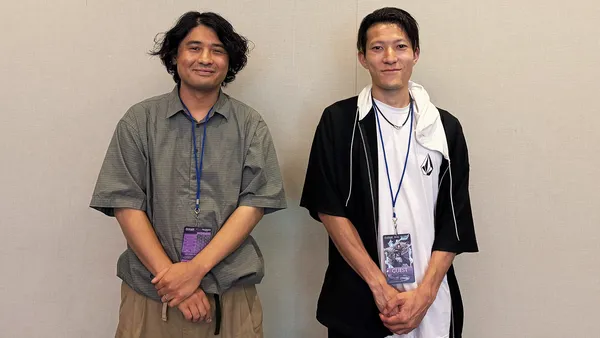
The Last Blossom movie is finally making its way to North American theatres, almost a year after its Japanese premiere. To mark this occasion, Anime Atelier is pleased to present you with an interview with the movie's director, Baku Kinoshita.
Baku Kinoshita is part of the creative team behind this original anime movie, known for its work on ODD TAXI, and has spent the past year promoting The Last Blossom (Housenka) all over the world. We previously had a chance to interview the talented director alongside producers Ryoichiro Matsuo and Hirofumi Ito, but this is the first time that we got to talk in depth about the movie's storyline and characters.
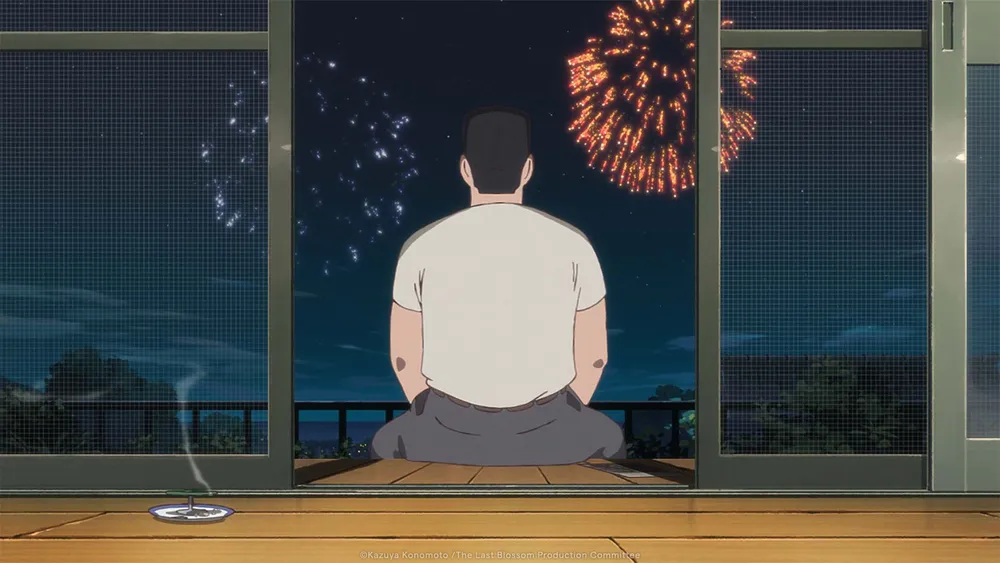
The Last Blossom follows a dying yakuza, Akutsu, who is serving a prison sentence and questioning his life choices. Akutsu knows his end is near, so he is not at all surprised when a balsam flower in his cell begins talking to him, since, after all, only small children and dying people can hear them.
The following interview contains some mild spoilers. It has been edited for clarity.
Q: You’ve mentioned in a previous interview that you wanted a story that features a talking plant. Why a talking plant specifically?
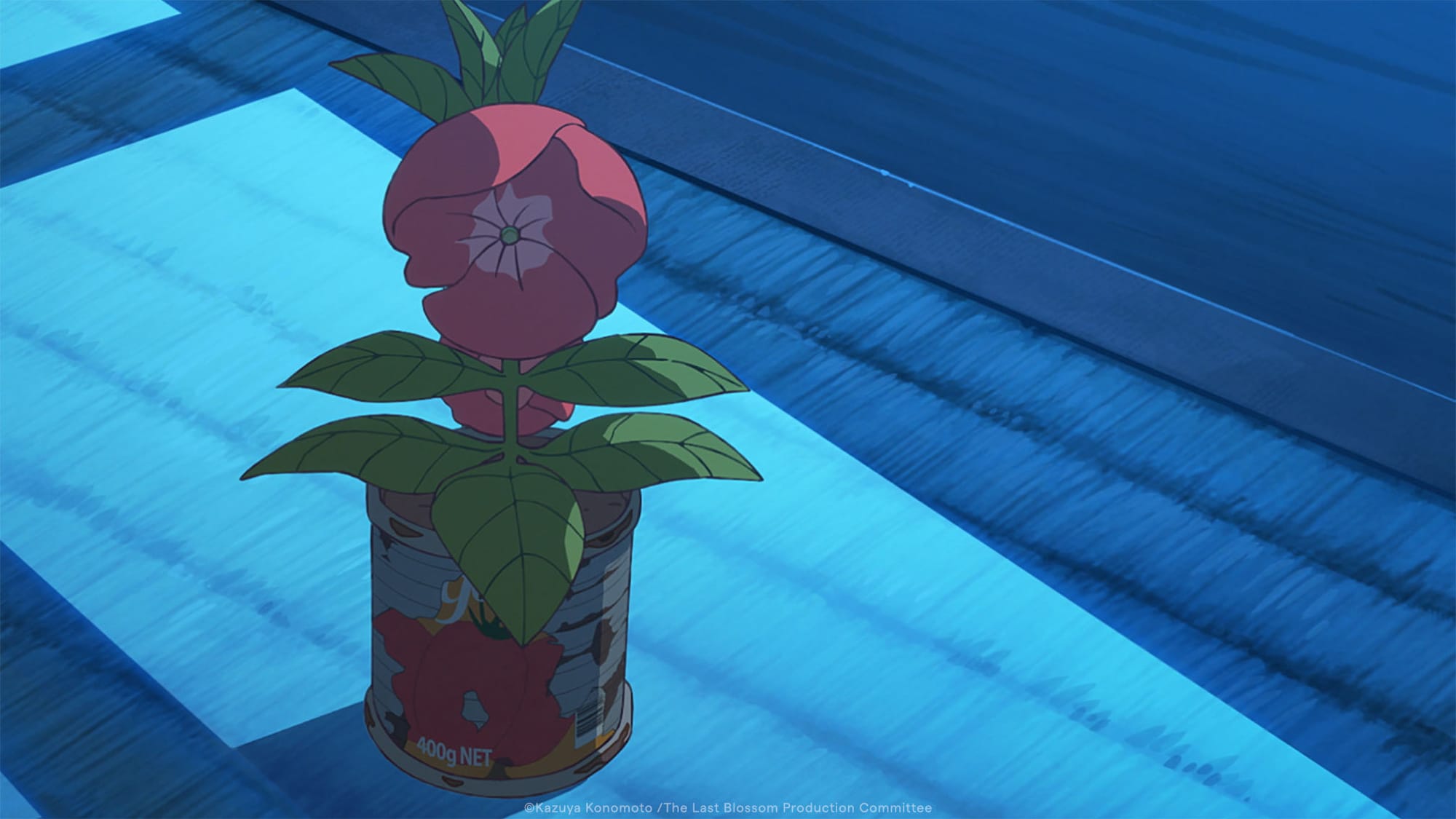
Kinoshita: My last project [ODD TAXI] had talking animals. I wanted to go in a different direction, so I chose plants. When I decided that I was going to have a talking plant, I did the research. It was really interesting how they have a survival strategy and how they evolve to match that; they come up with different ways to survive. In this case, how they use their seeds. As they've figure out these different ways, I feel like they have a will to survive, and I thought if I made that survival strategy into having plants talk to a human, it would be an interesting concept, so that's how I came up with it.
Q: How did you come up with the flower’s personality? I feel like throughout the movie, the balsam flower (housenka) represents Akutsu’s biggest fears and self-doubt, which is why it’s so rude to him all the time.
Kinoshita: The balsam flower, as it's set in the film, has lived for over 100 years, and its memories are passed down. They all have shared memories. I think it's there really to represent how it transcended human intelligence because it's seen how humans live and how humans came by and evolved throughout the 100 years. He’s much smarter, and he's worldly, so he has that sort of point of view, whereas Akutsu, on the other hand, is human. He's ordinary, maybe not the smartest and not the best. I thought that having the contrast of those two different characters would be interesting, so that's why I made it that way.
Q: How much were you involved in the script writing?
Kinoshita: First, I would brainstorm with [Kazuya] Konomoto-san, the scriptwriter. I’d talk with him, come up with a concept for the story, where the story's going to go, and character development as well; that's all talk in that for initial brainstorming. Then I would come up with characters, and then I'll just say, “Yeah, go ahead and use them as pawns, use them exactly how you would think that they would move,” and that's it. Once Konomoto-san has enough information to start writing a script, he will start writing the script. During that time, I don't get involved at all, and I leave it all up to him. He'll come back to me with the first draft, which usually is very close to being the final draft, and then maybe we'll discuss a few times—two or three times—and maybe make some fixes, though sometimes we don't.
Q: Who do you feel is the most developed character in the story, the most complex one?
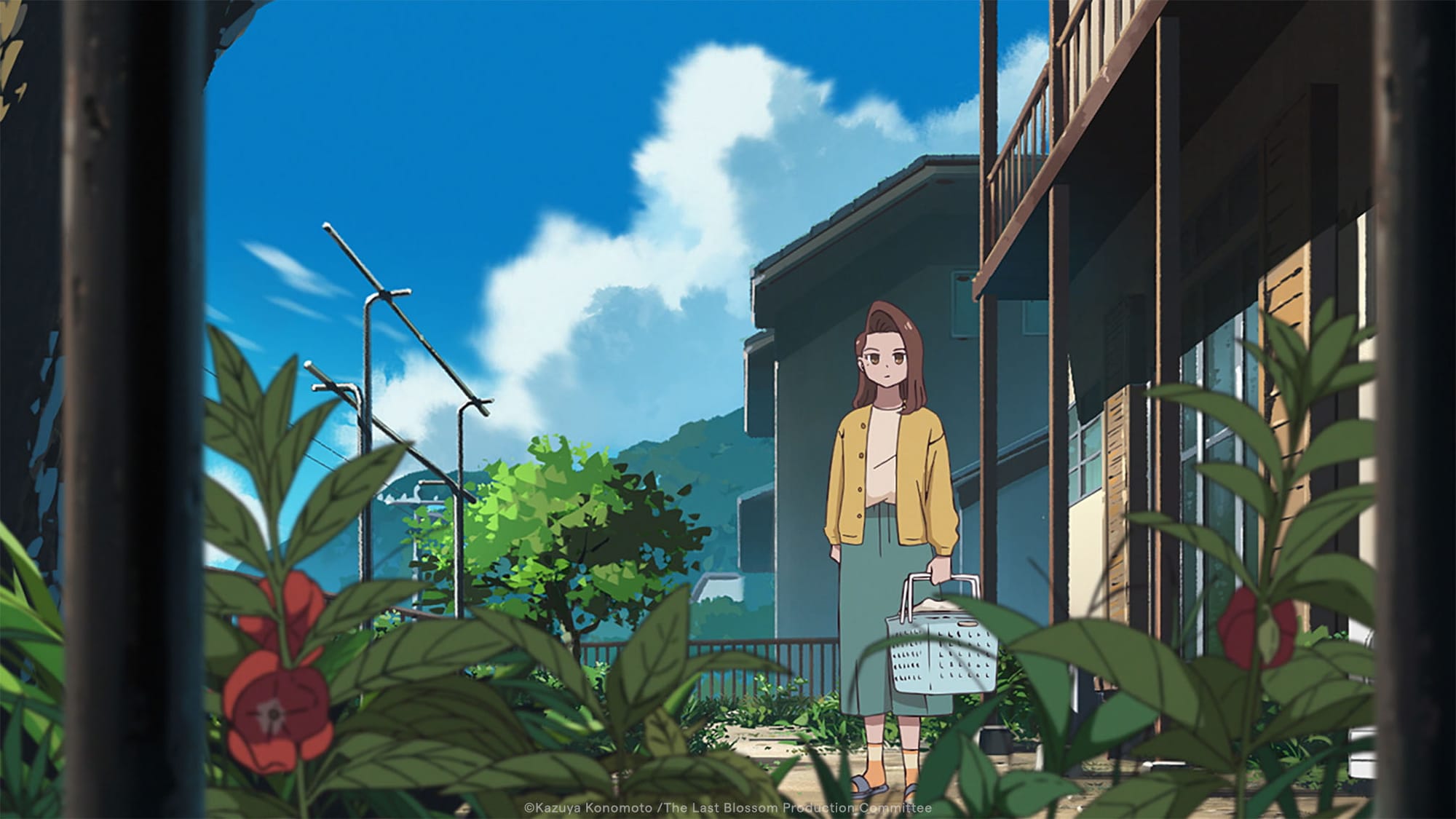
Kinoshita: I think the most complex is Nana, because she has her love for her child, but then she also has her love for her partner. These are different types of love that she deals with, but she goes through a lot of things, and she overcomes them herself without help from many people. I think that's what makes her complex and developed throughout the film.
Q: I would like to ask about the voice cast: it is a combination of traditional voice actors and live-action actors. Why this combination? How do you think it's contributed to the finished movie?
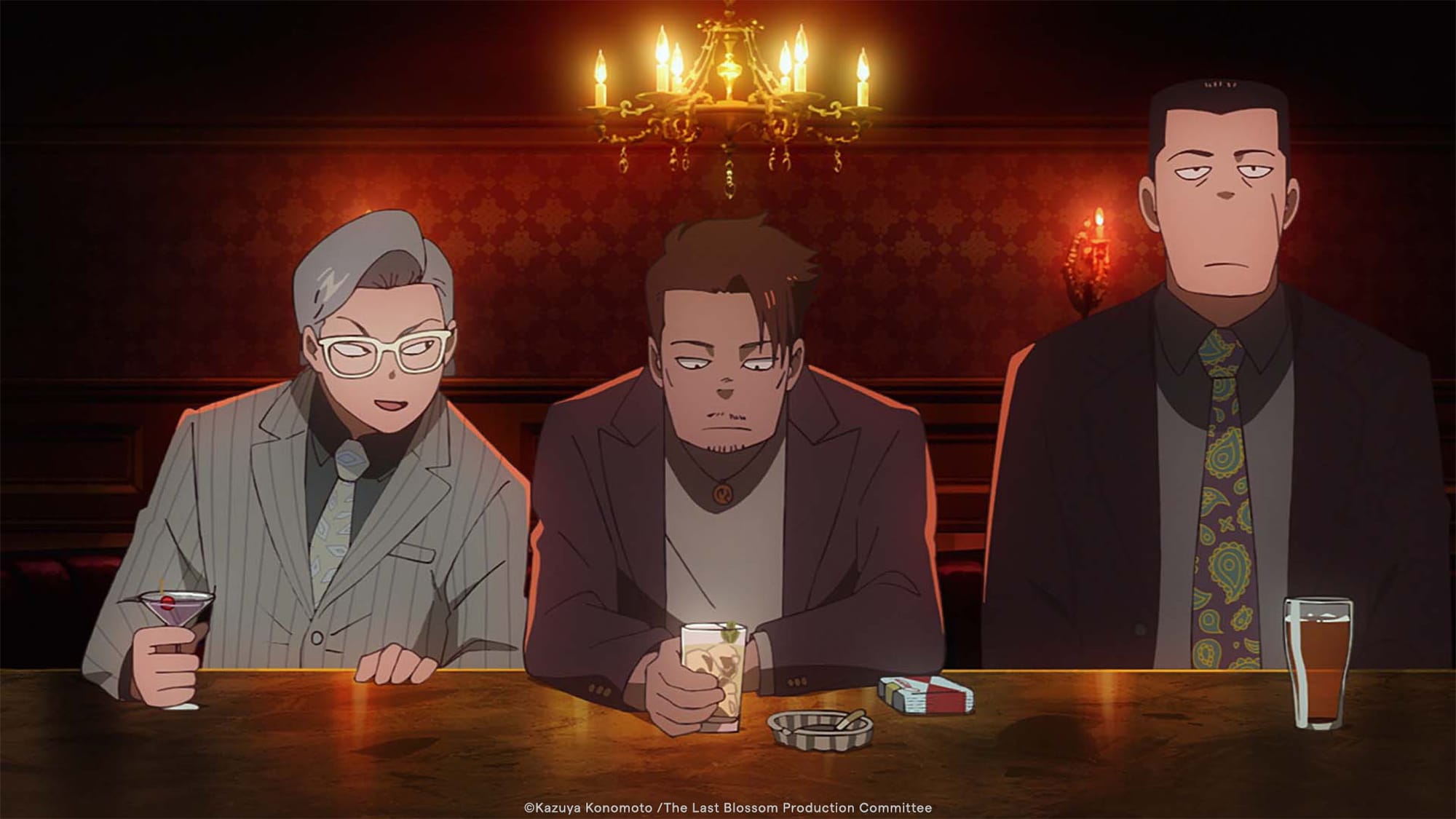
Kinoshita: When I was casting for the film, reality, or the toughness of life in reality that we have, was really important. For example, Akutsu is roughly the same age as the actor, [Kaoru] Kobayashi-san. Kobayashi-san mostly does live-action films, so I thought by casting him, he'd really bring that nitty-gritty of life and the reality of what it's like to live a harsh life.
Q: Did you have to do any specific research for portrayal of yakuza in the movie?
Kinoshita: I really think people who live in the criminal world don't have a future that is "promised", so they tend to live in the moment. Due to that, I imagine their life is very fleeting, and from that fleetingness, you could find beauty in it. For the research, I guess I took inspiration from movies by Takeshi Kitano and Juzo Itami, older movies that depicted yakuza. For the clothing, I would look up what they wore, the kinds of clothes that they wore at the end of the Showa era. I also researched the laws involved, like what actions or what businesses they could do.
Q: Since we’re running out of time, this will be the last question. I often feel like anime movies end abruptly or are quite rushed towards the ending. However, The Last Blossom manages to avoid this. How did you go about fitting this comprehensive story into a 90-minute runtime?
Kinoshita: The first reason is that the producers were generous about the way I wanted to outline the plot in the movie. If I wanted things to move slowly, they allowed it. If they had restricted me to, say, a 60-minute film or said, "Let's make this a 70-minute film," as you said, it would have been rushed, or things would have moved along a little too suddenly. Also, I think another reason is that the script was written perfectly. Konomoto-san wrote the script as if it really was meant to fit in 90 minutes. I just had to follow that because I think if it was 120 minutes, it would have been too long.
We'd like to thank Mr. Kinoshita for taking the time to chat with us and Ms. Satsuki Yamashita for translating.
The Last Blossom arrives in North American theaters on August 30-31. Tickets are now on sale.
Images: © Kazuya Konomoto / The Last Blossom Production Committee