What Happened to One-Punch Man Season 3?
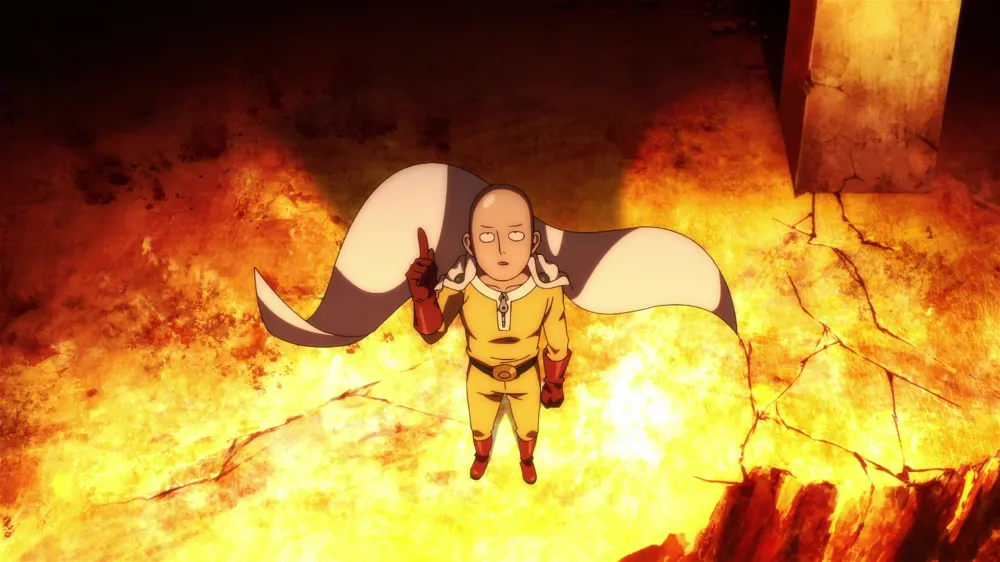
One-Punch Man Season 3 has swelled into a memetic status as audiences use the newest season of the series to reference "bad" or "disappointing" adaptations.
Some have abdicated studio J.C.STAFF of complete fault of the show's shortcomings, while others find the company explicitly responsible for the show's mess alongside its production committee and primary producer Bandai Namco. The contextual evidence points somewhere in the middle: certain circumstances put the show in a precarious position, poor management and commitment by the studio made that situation much worse, and the committee seemingly made little effort to commit to the project.
A good analysis of the show that already exists and takes into consideration general industry ideas and comparisons to One-Punch Man's previous seasons is TotallyNotMark's video produced with assistance from the Sakugablog team. Please check it out to engage with more varied perspectives on the matter and from people more knowledgeable on the subject, as well as to indulge in topics that I won't cover.
Project "Start"
Announcements don't mean anything in regard to "when" a series started planning, started pre-production, or if any problems have arisen that can delay the project or outright destroy its schedule. When an announcement says, "production confirmed" or "production greenlit", that is not an indication of the show starting the animation phase or already being in it.
To use a basic example: Kizumonogatari (2016, SHAFT) was announced in 2010, released a fully animated promotional video in 2011, had a release date on some early posters for 2012 or 2013, and... didn't start animation production until around early 2014 according to co-chief animation supervisor Hiroki Yamamura's join date. In other words, when a project's animation process starts is basically a guessing game until someone on-site says something specific. Some more knowledgeable community members can take accurate guesses based on staff compositions and the final product, but these are never guaranteed estimations.
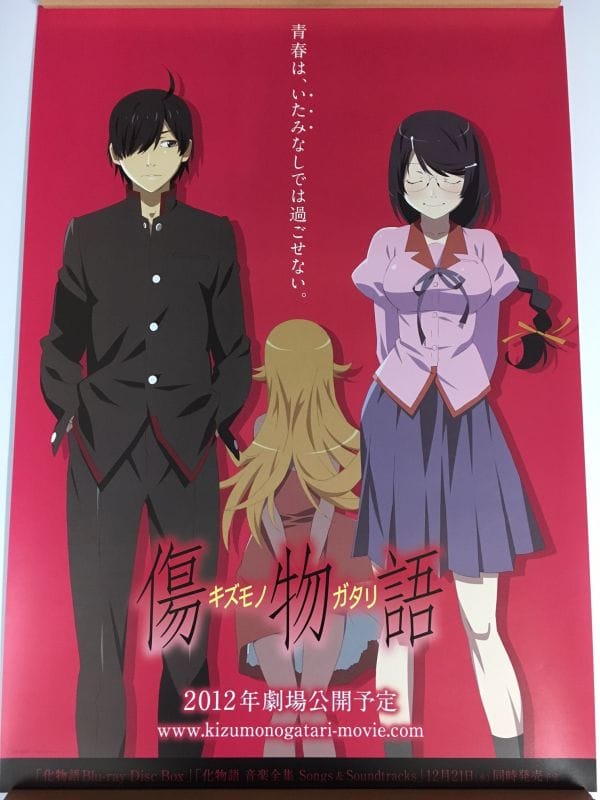
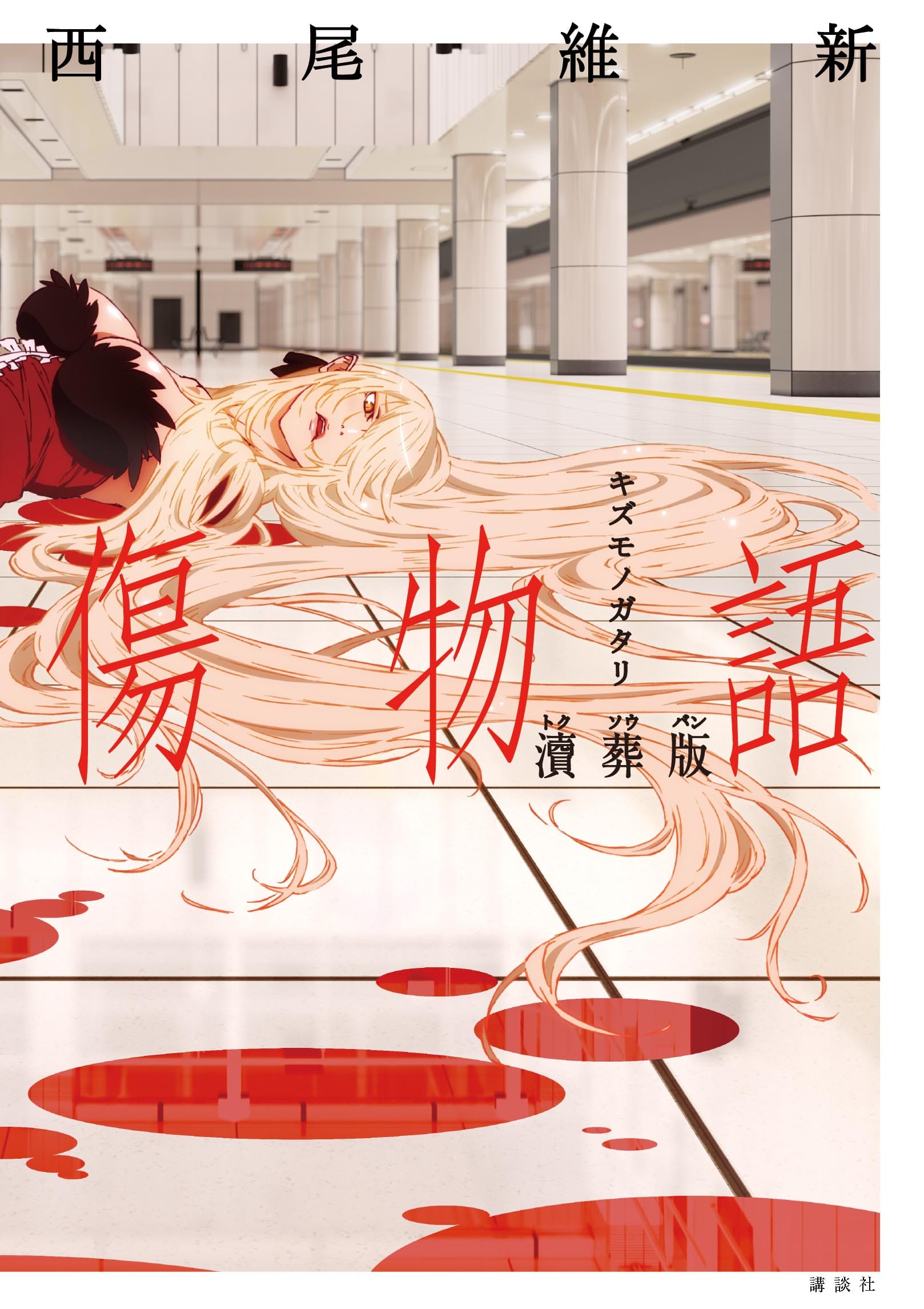
A teaser poster for Kizumonogatari (left) and a poster for the first film (right). ©NisioIsin / Aniplex, Kodansha, SHAFT
Some projects, like Moonrise (2025; WIT Studio), have suspiciously lackluster marketing from its distributors for unknown reasons but still end up looking relatively good. Subpar marketing is not a guaranteed indication of incoming contentious or outright bad quality, but other series purposefully don't market material to hide the rough edges... or the fact that there aren't any edges to show off.
One-Punch Man Season 3 was barely marketed. After its initial announcement in 2022, there were few updates on its release or progress. A teaser visual and teaser trailers were sparsely released into 2024 (including a pre-animated trailer), and then it was abruptly announced for an October 2025 debut. By then, not much was known about who was working on it. At Anime Expo 2025 in early July, voice actors and Bandai Namco producer Chinatsu Matsui had nothing new to share.
Earlier in the year, J.C.STAFF animation producer Atsushi Fujishiro also commented on the show was proceeding "steadily." This sort of statement is more or less PR talk that means "we're working on it." It's impossible to divulge even vaguely what state of production the show is in just based on that statement. A producer from the studio (or otherwise) is unlikely to directly comment on bad situations because they're also publicists: regardless of how good or bad a product is, it's unsensible to not try and "hype it up." Fujishiro's vague comments are an acknowledgement of the project and little else.
Matsui also did an interview published by Newtype (after the series started airing) mentioning episodes #5 and #9 as highlights. Some see #5's lackluster and unfinished quality (though, the whole show is "unfinished") to be an indication of Matsui "lying." TV anime producers are from the various committee members and talk primarily with the animation producer or upper executives from the studio. As the Bandai Namco producer, Matsui probably broadly knows what's going on behind-the-scenes, but she's not at the studio overseeing production and is unlikely to know the episode-by-episode specific details.
It's not uncommon for anime episodes to be finished mere days before they air, so Matsui's comments are hardly her knowledge of the production site coming through, especially depending on when the interview was conducted (rather than when it was published). A likely scenario is that #5 was meant to be a "priority episode" and one brought up during the producer's meetings with Fujishiro or other staff, but for one reason or another it collapsed under its weight.
The New Director
After months of being in the dark, Shinpei Nagai was eventually announced as the new director. Some graced him with positive encouragement, others questioned his lack of like-series experience, and then there was the "hentai director" thing.
Calling Nagai a "hentai director" while saying "it's true, though, isn't it?" feels like a put-down. Even making those comments with respect to hentai as an art—which, it is, let me be clear—there are obvious negative connotations in the context of describing the action shounen series One-Punch Man's new director. Nagai hadn't been involved in hentai for a decade by the time his name was attached to the series, anyway.
The vast majority of Nagai's career over the last 30 years is relatively standard anime production. He joined Shin-Ei Animation in the late 1990s as a production manager where he befriended the late Hiroshi Ishida who moved with Nagai to Studio Junio. They parted as Nagai briefly worked at RADIX and Ishida went to Synergy SP, and in 2004 Nagai incorporated his own small company called Studio Lagoon (officially founded in 2000) which he ran for another three years.
The period in which he worked on hentai ranges from 2006 to 2015 (less than a third of his career now) during which he directed two OVAs in 2008 and 2011. Using these works, none of which are especially popular, to introduce Nagai over a decade later for a completely different TV anime project is odd.
Kaguya-sama: Love is War (2019; A-1 Pictures) director Mamoru Hatakeyama, originating from Phoenix Entertainment, was a production staffer on mostly hentai starting in the late 1990s, but that's not often brought up because it's rarely relevant to his current work. Likewise, AIC, Magic Bus, Seven Arcs, or the modern Pierrot subsidiary Studio Signpost are rarely labeled as "hentai studios" even though they each have hentai as part of their historical contexts (some more than others). The "hentai director" descriptions are mostly clickbait, lazy research, or purposefully malicious.
Nagai's openness with directing inexperience was primarily about his lack of action-specific experience. His previous TV works as lead series director are limited to the short-form comedy series Inugami-san and Nekoyama-san (2014; Seven) and I Can't Understand What My Husband Is Saying (2015; Seven), and the ecchi Dogeza: I Tried Asking While Kowtowing (2020; ORENDA).
Some took Nagai's comments as his admittance of a lack of directing experience in general, and while the three aforementioned works may seem like little considering they're 3–5-minute episode series, he has helped as an assistant director on a couple of projects too.
Unlike in the film industry, "assistant director" (referring to the 助監督 or 副監督 credits) does not refer to a liaison between the director and certain departments, or a manager that works with the director, or someone involved in the planning and budgeting of a project. In anime, an "assistant director" is usually a type of "lower-ranked" series director who is balancing some of the work with the lead series director.
The assistant director has authority in making decisions, attending production and art meetings, and handling whatever work the director needs them to oversee. Tensura Season 1 (2018; 8bit) director Yasuhito Kikuchi, for example, noted that he wasn't overseeing everything assistant director Atsushi Nakayama was doing and entrusted him with parts of the project he couldn't get to.
Nagai was the assistant director for Yoshitomo Yonetani's Vatican Miracle Examiner (2017; J.C.STAFF) and Shunsuke Machitani's directing debut Fantasia Sango (2022; Geek Toys). He was also asked to do some help as a directing assistant (監督補佐) for three episodes of Koikimo (2021; Project No.9).
Production Contexts and the Director
Why was Nagai chosen as director, then? Why not someone else in the action avenue?
Nagai wasn't chosen as the director. At least, not originally. Nagai is a replacement director for someone who left the project earlier. By around late August 2025, I thought it was weird that there was still no director announced, which finally came in early September. Some thought it was because he'd face backlash. Nagai later said he told the staff to purposefully conceal his name for a bit due to not having a standout career as an animator. Considering the lack of overall promotional material in the year leading up to that statement, it seems like a half-truth.
Nagai's appointment as director feels like a "last-minute decision", so to speak. After I referenced the TotallyNotMark video on X/Twitter, a connected individual reached out with confirmation: Nagai wasn't the show's original director, he was a replacement, and he did not have that much time to work. Another person later confirmed the original director's identity, of which I can't get into for privacy reasons (less about getting someone in trouble for leaking the information, and more about not wanting to send harassment their way).
The most I'll say is that the original director was fit for action. They were busy when the new season was announced and it's unlikely that they were working on One-Punch Man much, if at all, between 2022 and 2024. That director was responsible for the original pre-animated trailer released in 2024 as well, that wasn't Nagai's doing. J.C.STAFF had a proper director fit for the show in mind, but that person left for reasons I don't know.
Why was Nagai selected as the replacement, then?
At a point, the animation producer and staff can't get greedy and say that they need another good action director. If no one's schedule is free, or no one with the experience of series directing is willing to take the burdensome task of being One-Punch Man's director, the job eventually falls elsewhere.
Nagai is considered to be trustworthy and reliable by his peers and colleagues. Younger staff like Kento Fukuda have affectionately referred to him as being like "a real-life Saitama", while veteran staff speak about him as being a "true professional." One animator who reached out privately said that it's easy to work with him, and his status as a veteran makes him more capable of juggling the workload compared to younger but more ambitious staff.
Nagai is known for efficient storyboarding, having boarded for a total of 24 episodes in 2023-2024 (12 per year). He's probably the fastest storyboard artist J.C.STAFF has on hand. The original director's departure put a heavy burden on the production and meant that they had less time to make the new season with the replacement, so it makes sense to get someone who works fast.
There are likely a number of directors more fit for the job of directing One-Punch Man, but the director's primary job at that point is sadly to just have something ready for broadcast. If no other capable directors are willing to take on the job, an efficient director is a good alternative. That director will still make an attempt at making something "good", that's part of their job too, but that's extra.
Giving his thoughts, animator Evakoi accentuated the theory that Nagai started working on One-Punch Man sometime in 2025, which leaves only months to go through both the pre-production process and start animation production depending on when he joined ("2025" does not mean "January 2025", it could be "April 2025").
The job includes finalizing settings like creature and character designs; working with the CG department for modeling; art meetings to decide on general aesthetics with the color designer, art director, and director of photography; finalizing the screenplay with the writer (if it wasn't finished during/before the original director's tenure, or something); as well as drawing all of the storyboards. There's also the director and production staff's job of trying to organize staff onto priority episodes or scenes, and the logistics of all of that. Then they have to actually start the animation process. Just how long did they have for each part? How long was it before animation work started?
Tangent: Similar Situations
I want to mention a series called Lucifer and the Biscuit Hammer (2022; NAZ/Jumondou). It's an adaptation of a manga by Satoshi Mizukami and was fairly hyped up following the anime's announcement. Fans ended up severely disappointed by the adaptation. On top of rushing the story, the animation is of blatantly poor quality in several respects. It's easy to blame primary studio NAZ for the project's undoing, and while they do bear part of the responsibility, the full story is more than just "NAZ dropped the ball."
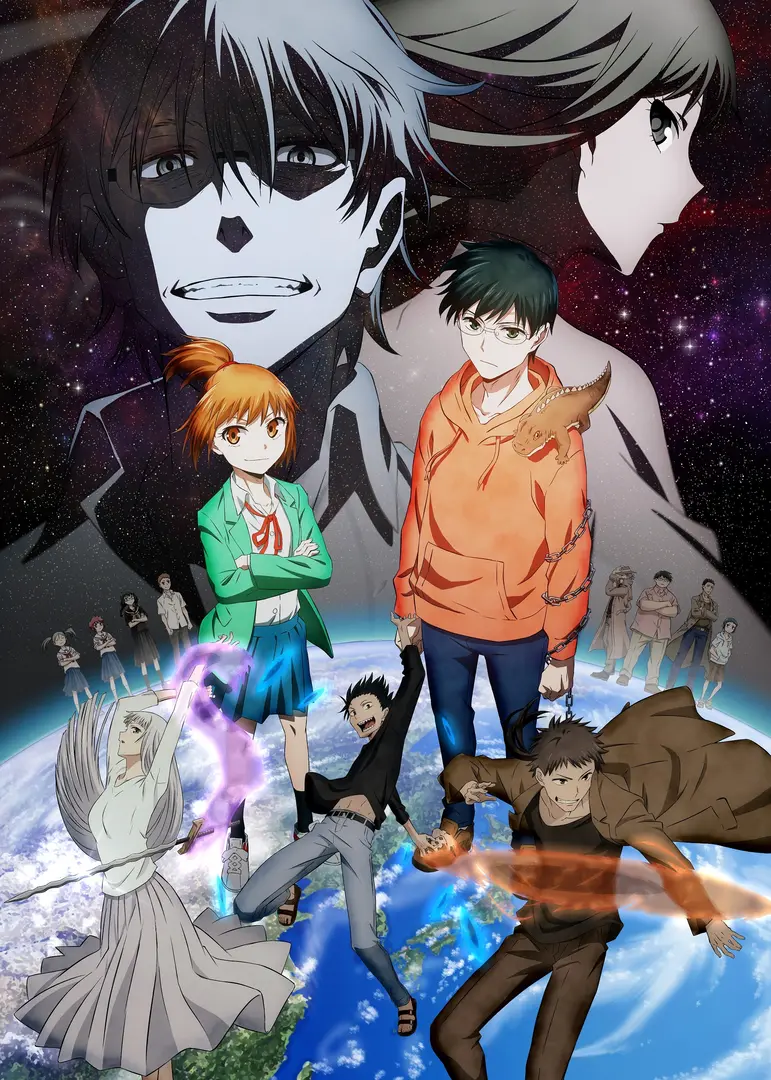
Deleted Tweets by original author Mizukami mention that someone joined the project as a core staff member which rocked the production. That person had creative differences with the author (who was also acting as co-series composition writer) and other staff members at the script stage and later left the project. Their departure effectively collapsed production leading to the remaining staff members and replacements to try and pick everything up with less time than they had.
That story is a pretty explicit inference to the idea that this person was the director. Nobuaki Nakanishi, the show's credited director (and presumed replacement), is not credited in a single episode for storyboards or episode direction, which series directors typically do at least once (though, not always). In the season just before Biscuit Hammer aired, he was also concurrently directing a series at studio Jumondou.
Speaking of Jumondou, they were credited in every single episode of Biscuit Hammer as "production assistance" (制作協力), indicating that the series was basically a co-production between NAZ and Jumondou as a necessity of work that NAZ could not provide. The animation producer, the animation coordinator, and the production desk are all affiliated with Jumondou, rather than NAZ. Blame for the show's upsetting turnout shouldn't be shifted to Jumondou, though.
Another series, Arifureta: From Commonplace to World's Strongest (2019; Asread/WHITE FOX), was announced in 2017 and then delayed in January 2018 just three months before it was meant to premiere. The staff, including the scriptwriter, director, and character designer, were all replaced and the show was delayed to July 2019. WHITE FOX, the original studio, also either backed out or was removed from lead position on the project. The studio received co-credit and ended up producing four episodes, but primary production shifted to Asread.
Pre-production had to be entirely redone. A new script, new storyboards, and etc. were needed. None of the original team's names made it into the finished product: everything was redone. It's imperfect, it has some ugly CGI, but the extra time and money ensured the staff could make something out of it.
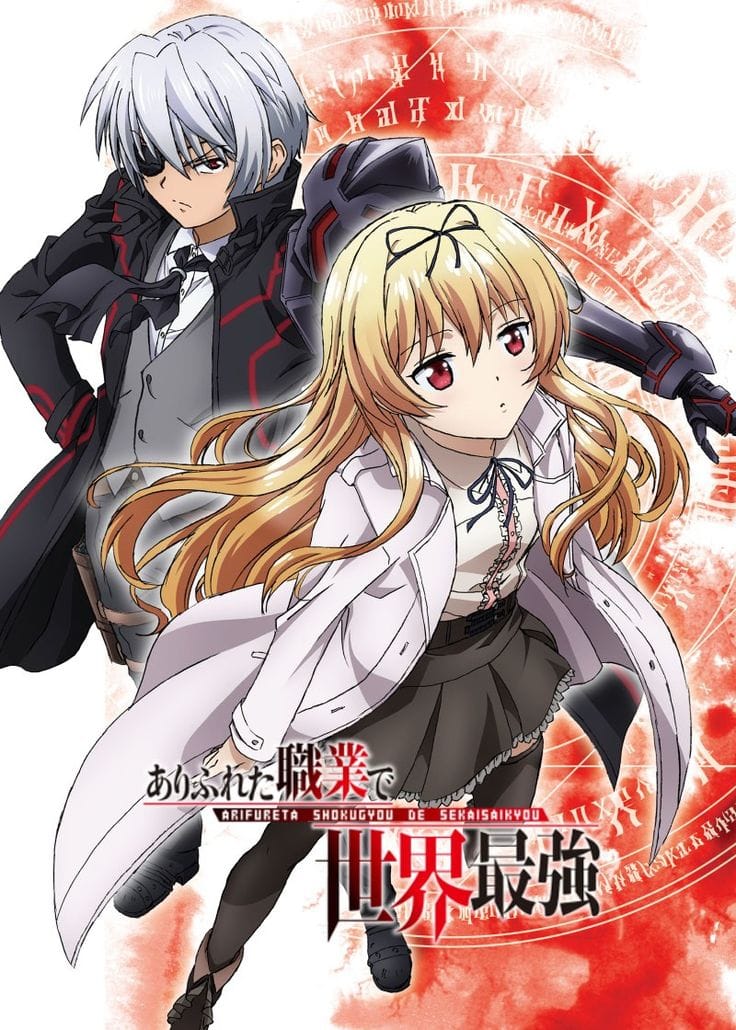
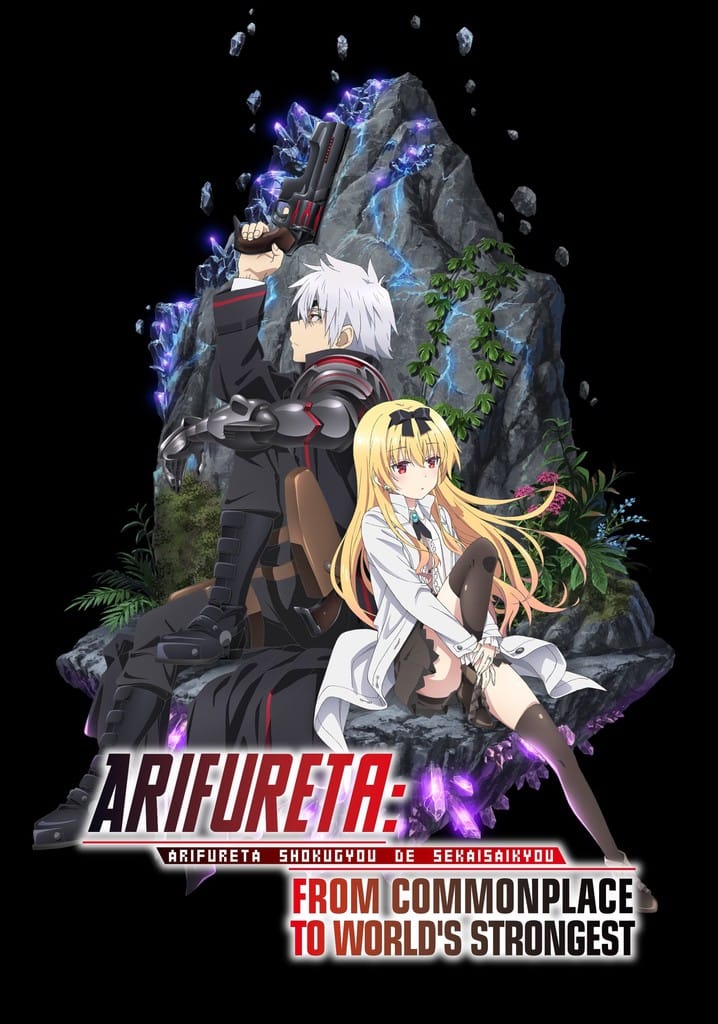
Arifureta: From Commonplace to World's Strongest key visuals from its original team (left) and replacement team (right). ©Ryo Shirakome, OVERLAP / ARIFURETA Project
If One-Punch Man's director was swapped out and the team had to start over from some point, a good course of action is for the committee to delay the series and for the studio to organize resources to support it, at least in an idealistic sense. Nagai's job, then, is to take on a heavily burdened project and make something happen even if it, quite frankly, sucks.
Storyboards, Cuts, and a Lot of Work
Nagai presumably worked on the storyboards into mid-2025 given his now-deleted X/Twitter account had a post sometime in August that said he finished storyboarding. This is two months before broadcast. For the whole of One-Punch Man, he storyboarded every episode except #9 and co-storyboarded #7.
While I don't find One-Punch Man to be exemplary of his capability or what he would have done with the work in better circumstances, I do want to address the claim that Nagai's storyboards for the series are mostly screenshots of the manga.
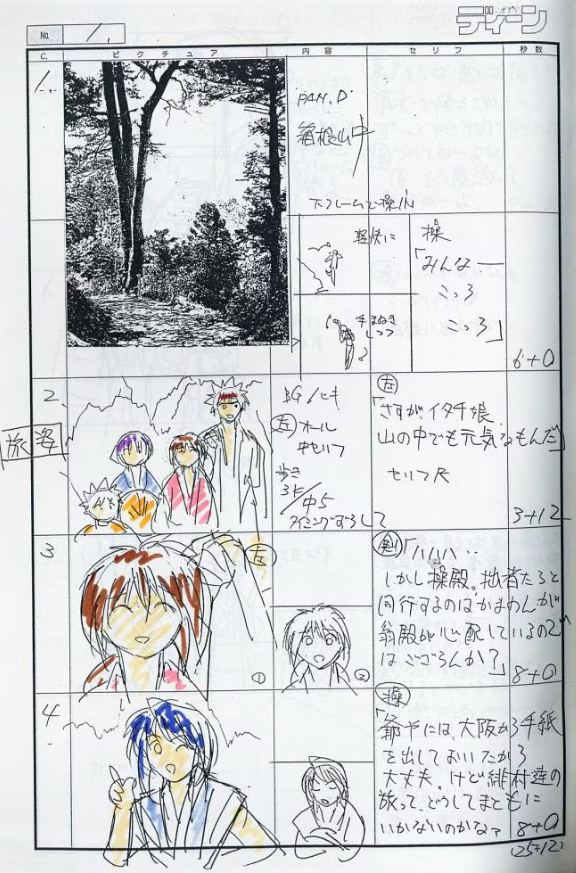
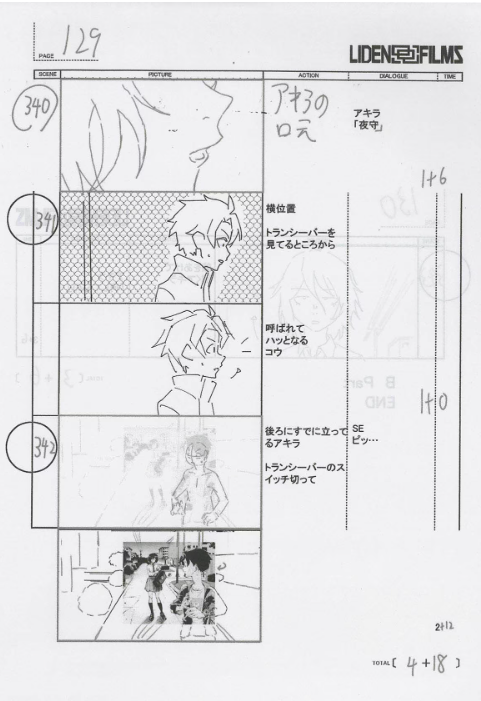
Image 1: Kazuhiro Furuhashi's storyboards for Rurouni Kenshin episode 78, with C1 being a manga panel. Image 2: Jutarou Sekino's storyboards for Call of the Night episode 2, with C342 having a manga panel.
There's a couple of reasons directors paste manga panels, primarily: detailed backgrounds that they want for a shot, replications of certain manga panels they find to be important to adapt 1:1, a lack of drawing time, an assumed lack of drawing ability, or laziness. Historically, this method of storyboarding has been frowned upon by the industry, but it's become more prominent as producers seek adaptations that closely follow the source material and directors are given less freedom in how they approach them.
Previous One-Punch Man storyboarders have pasted manga panels into their work, too, but the rumor isn't about Nagai using manga panels here-and-there, is it? The rumor is that Nagai is essentially using the manga as the storyboards.
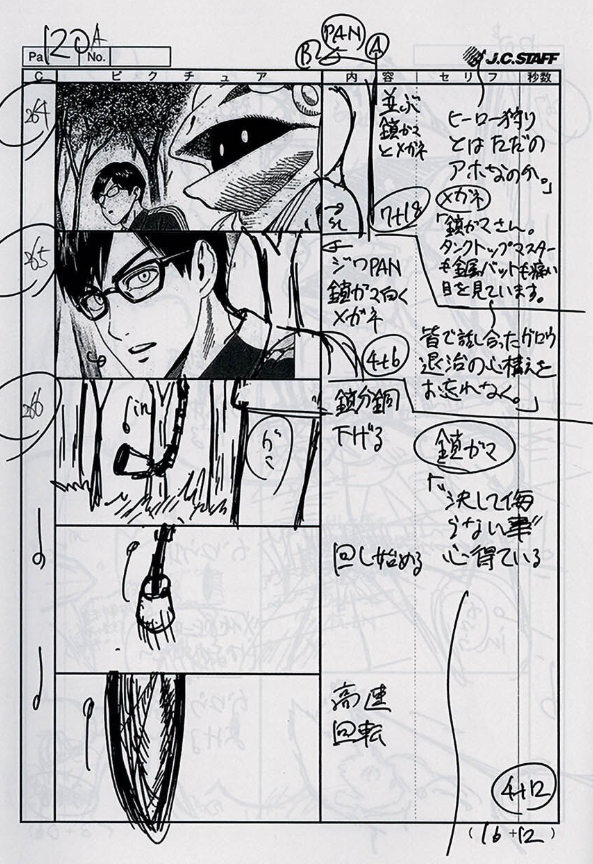
Nagai is established to be a quick storyboard artist, but is that because he's always "copy-and-pasting" panels? It's hard to say without being familiar with the source materials for series that he has been involved with, but he does take the time to hand-draw storyboards in every example of his work that I've come across. He even did a live storyboard drawing session at a CGWorld conference and hosts directing and storyboarding theory sessions with other industry members.
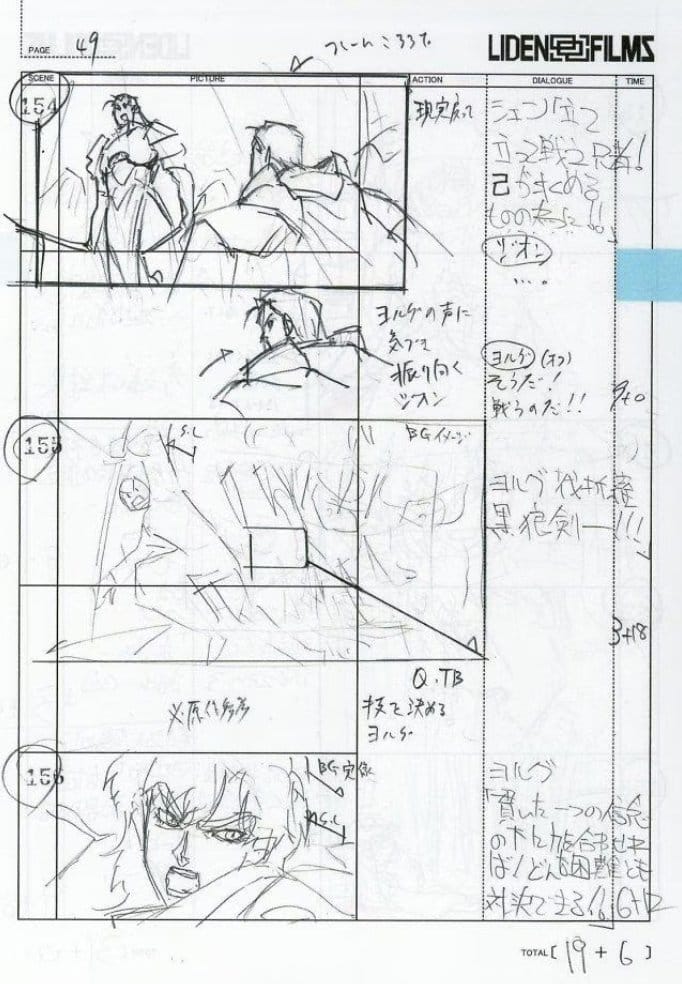
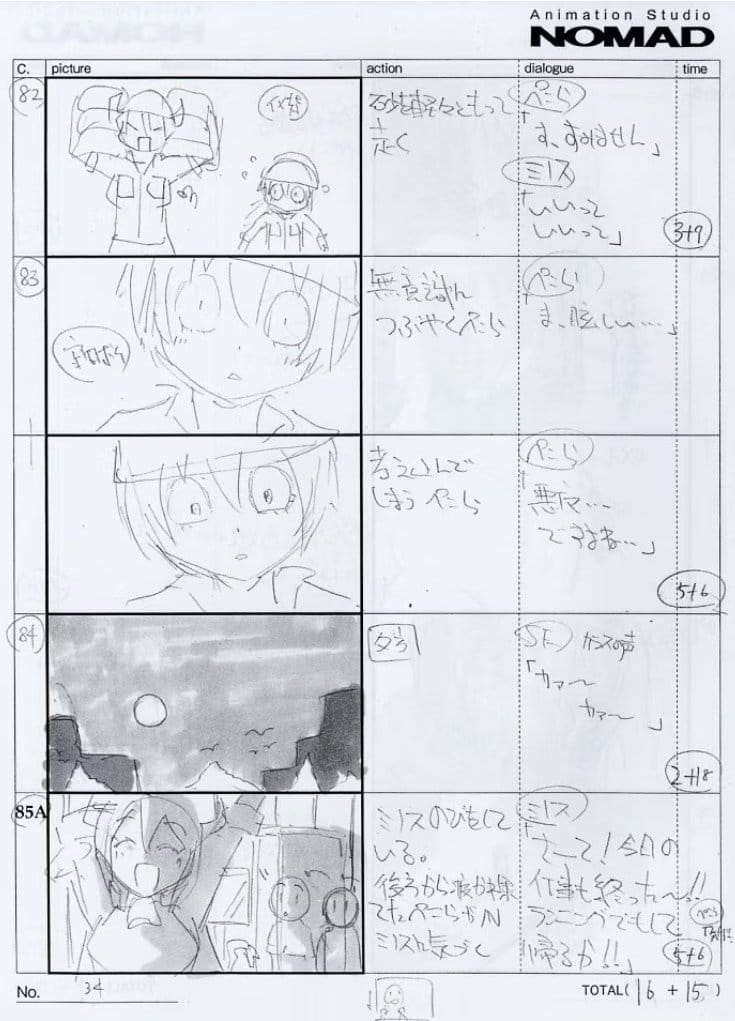
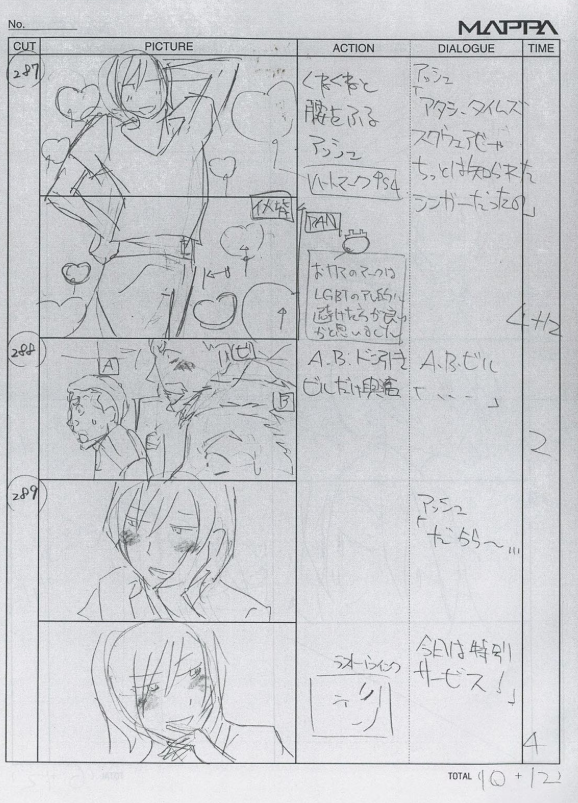
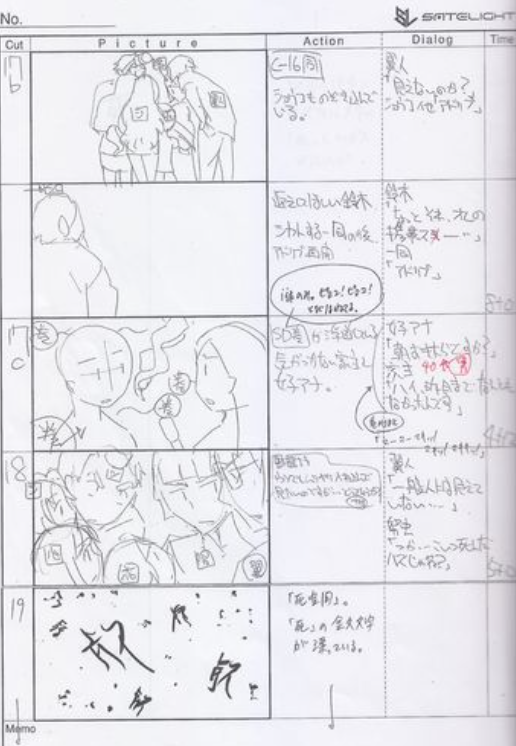
Shinpei Nagai's storyboards for episodes of Bastard!! Hell's Requiem Arc (2024), Dropkick on my Devil (2018), Banana Fish (2018), and Aquarion Logos (2015).
That's just for his general work, though; how about One-Punch Man?
Season 3 has an egregious number of scenes with background and character panning shots that stay on screen for an uncomfortable amount of time without any visual interest to keep the audience engaged. As the series goes on, it becomes a slog, and the episodic pacing doesn't mesh well with the content of the episodes, which is especially noticeable when these slow and unmoving shots are smacked between fights with faster cutting/editing.
Comparing the series to the manga, it's noticeable that a lot of the shots are more-or-less unchanged from the manga, so it's easy to come to the conclusion that even if he isn't directly copying and pasting manga panels, he is at least heavily referencing them for screen composition and the flow of shots at the very least. Cuts aren't paced well and rarely effectively translate the manga into an anime.
At the aforementioned CG World conference, Nagai explained the constraints of TV anime storyboarding, saying that the average production generally tries to stay under 300 cuts of animation (sticking closer to 250), which his mentor Hidekazu Satou from studio Satelight taught him. CG World notes that Nagai can finish part of a storyboard in around two days, meaning he could potentially storyboard an entire episode in as little as half a week.
Note: There are other inferences on the average number of cuts, but they're generally within the same ballpark. Animator and storyboard artist Gin-san, for example, says the average TV anime is probably 250~350 cuts.
Storyboards usually take between 3 and 5 weeks to make, but some storyboard artists are meticulous to the point that it actively hurts the production (Yasuomi Umetsu talks about this being an obstacle of his in a Kite interview). Other directors, like Yoshiyuki Tomino in his youth, can speedrun storyboards and draw an entire episode's worth in the span of a week or less. Sometimes, it's circumstantial: Akiyuki Shinbo, infamous for delaying productions with how long his storyboards and corrections can take, said he storyboarded his episodes of Hidamari Sketch in around a week.
While cut limitations are meant for the "average production", there are series or specific episodes that go over 300 cuts and lean towards 400 or 500 cuts depending on the circumstances, including the director's specific style, the content of an episode (i.e. action-heavy episodes), or the episode's production priority (given more resources and time and, thus, having more leeway in amount of cuts).
It feels like Season 3's slow pans and pacing are "intentionally" limited. Stylistic choice or otherwise, there's a simple intent in reducing the amount of movement or the number of cuts in the show: less drawings, less of a burden for every single department.
The storyboards feel like they're attempts at lowering the burden on the staff: the art team doesn't have to draw as many backgrounds, the animation team doesn't have to draw as many layouts (and as many frames of animation), and so forth; and if Nagai is just copying from the manga, then there's a reference for other staff to work from.
That doesn't mean these decisions are good creative decisions. Plausible intentions of reducing the workload aside, the results are subpar because it's boring and barely works as visual storytelling. I respect Nagai for the work he put in and don't blame him for his circumstances, but on subjective analysis the show falls flat far too often. By staying too close to the manga's compositions, the staff have to work on making a simplified replication of the manga's art (animation is usually significantly less detailed than manga art, so this is a generalization of adaptations as a whole). The timing doesn't feel good and it's uninspired storytelling.
Several episodes turned out pretty bad and a production crunch still happened, so was it worth it? There's no right answer. If he hadn't storyboarded the episodes himself, some episodes may have been more interesting to watch, but storyboards require storyboard meetings with the director and then the aforementioned weeks to draw, not to mention the storyboard checks for coherent continuity or other possible issues.
Are Nagai's storyboards for One-Punch Man good? For the most part, not really, he's done better to be blunt.
Disco Lights
Neon filters. "Filters." They're mostly colors applied to the digital cels. Some shots use heavier compositing (or maybe completely alter the colors at the compositing stage), but most of the so-called neon shots are just wacky cel coloring.
One-Punch Man's "strange colors" are broadly used in "rimlight" or dual lighting source scenarios with heavy shadows against minimalistic backgrounds. They're meant to make the character pop off of the screen. I don't think these weirdly colored shots are inherently bad in concept as it's similar to styles used in animation that can be found in the 1970s and maybe even the 1960s (that do look good, for the record), but they feel random and less cool than they're meant to be.
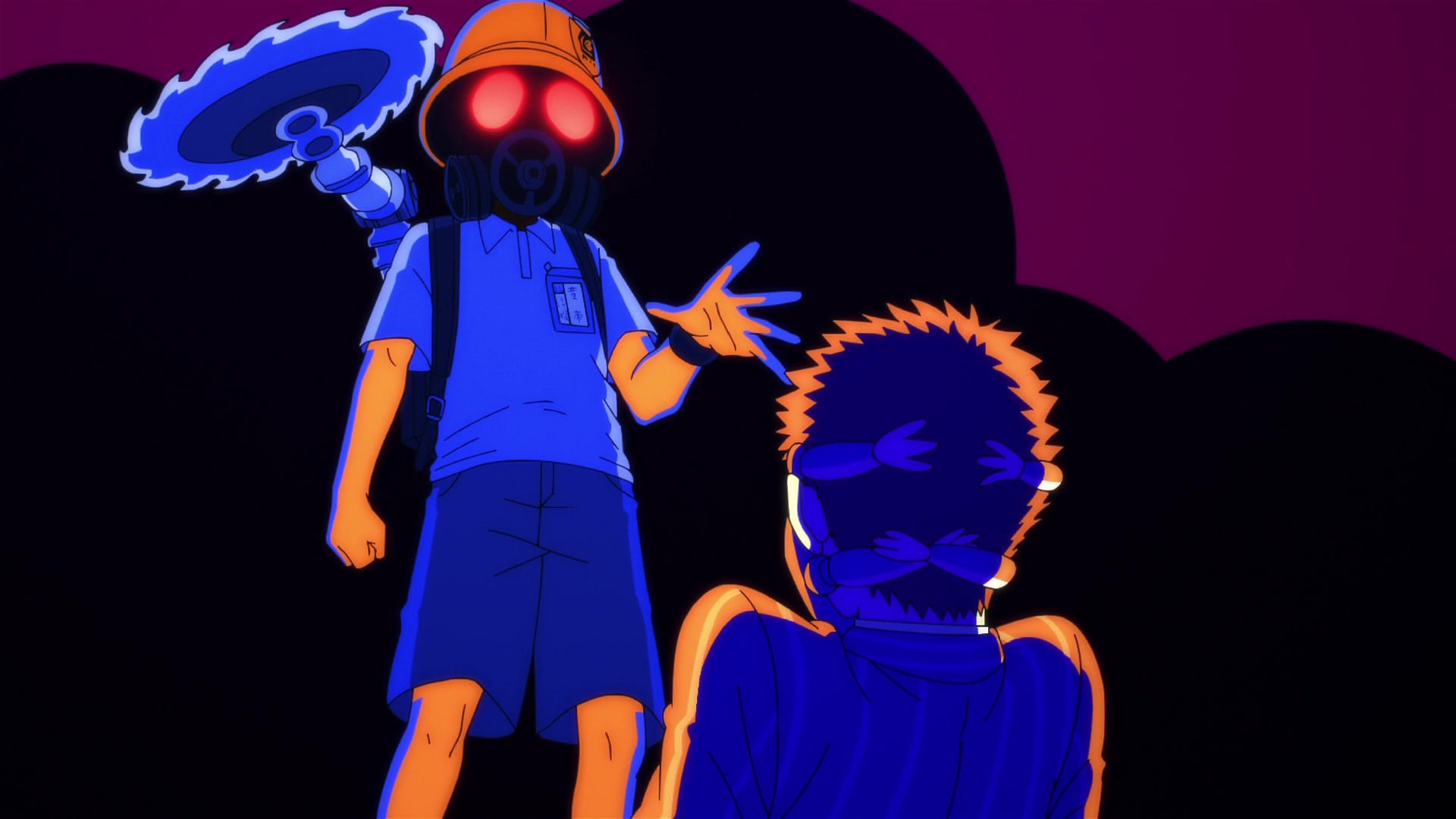
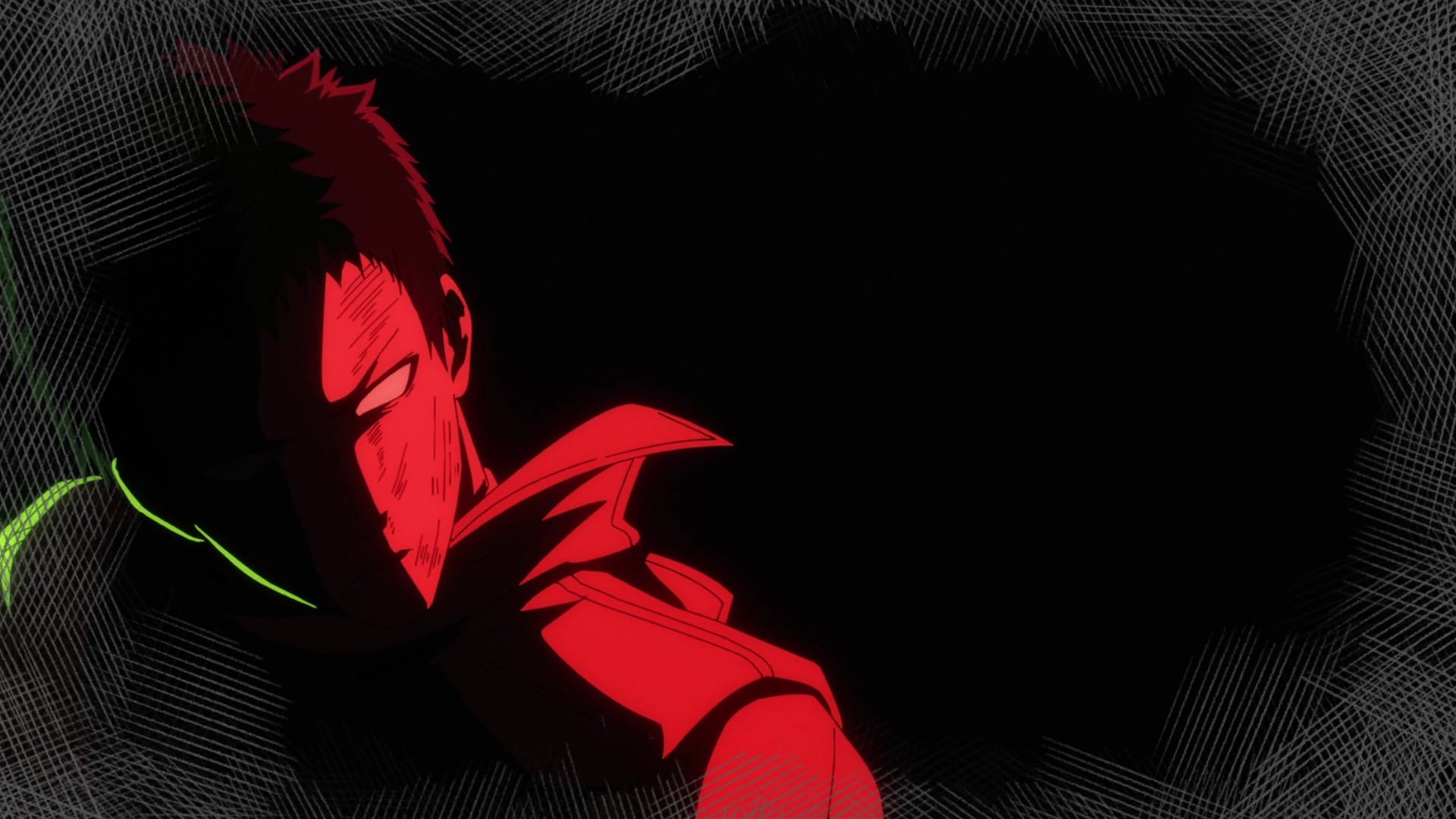
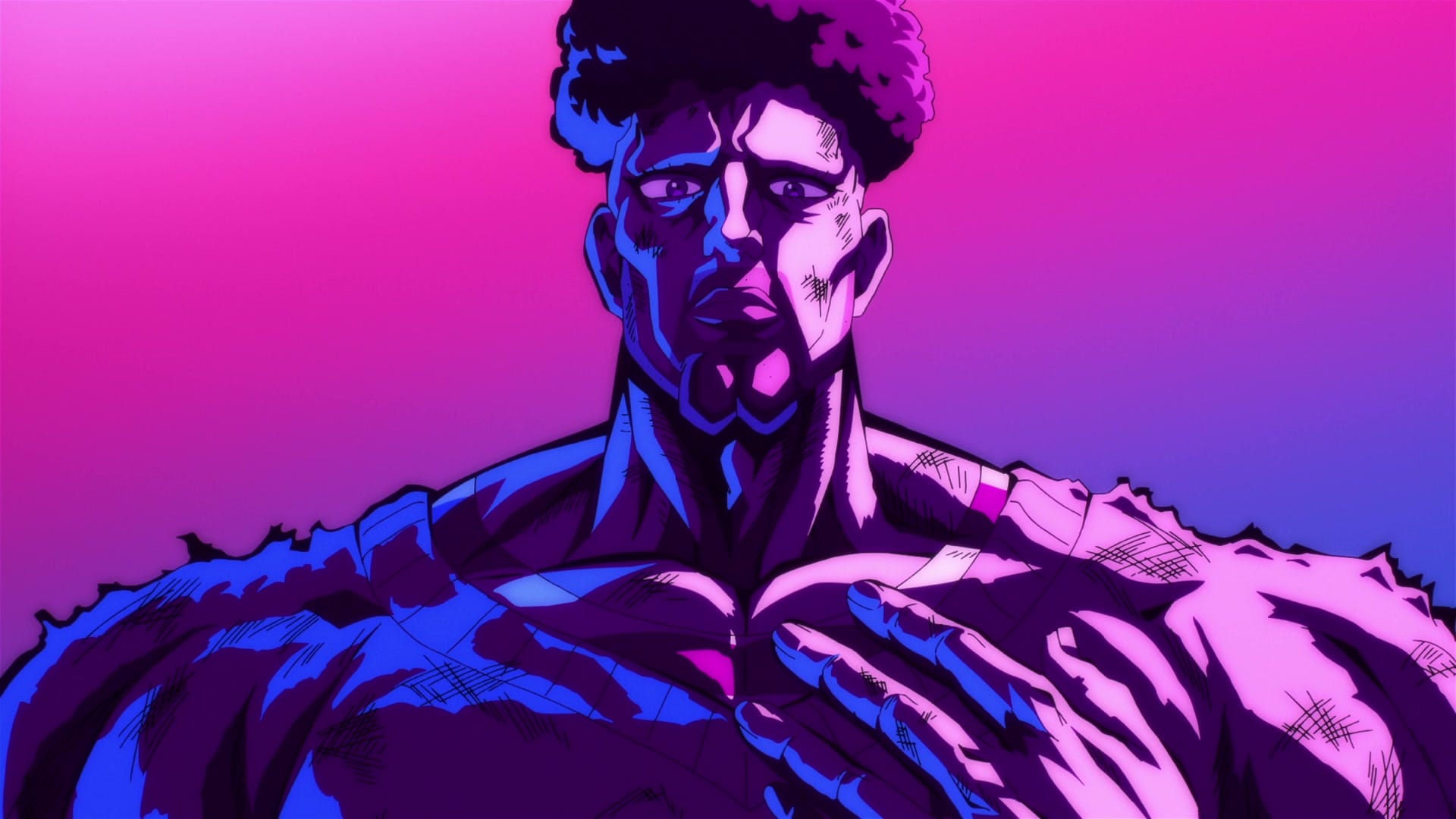
©ONE, Yusuke Murata / Hero Association Headquarters
The characters pop more, objectively speaking in consideration of color theory, but what do these colors and this harsh shading style do for the atmosphere of the scene and the context of the (individual) cuts they're being used on? They can be used for "aura", or they can be used as funny reaction shots, or they can feel menacing; but there has to be an understood intent or expression that can be inferred.
These colorful shots look cool now and then, but there's rarely contextual relevance or artistry in the decision to have them. An ordinary shot will cut to a neon shot where nothing about the character's inner-monologue narration, environmental circumstances, or the general atmosphere changes. It feels like adding color solely for the purpose of adding color; the colors rarely meaningfully add to the series' visual language. The intent isn't conveyed and it's distracting.
What I don't like about them on pure aesthetic choices is the fact that they've turned the chroma up so high, that's the "neon." It's a pop style that feels unbefitting of the series and the scenes they're in, so it might look better with desaturated colors.
When the colors are used for every character introduction in a scene/episode or even just for reactions to the most uninteresting information with no meaningful expression it becomes overbearing and irritating. Episodes #6 and #10 come to mind because of how distracting the color use is in scenes where they don't do anything, as well as the individual problems of #6's outwardly ugly color choices and the sheer number of "neon shots" in #10.
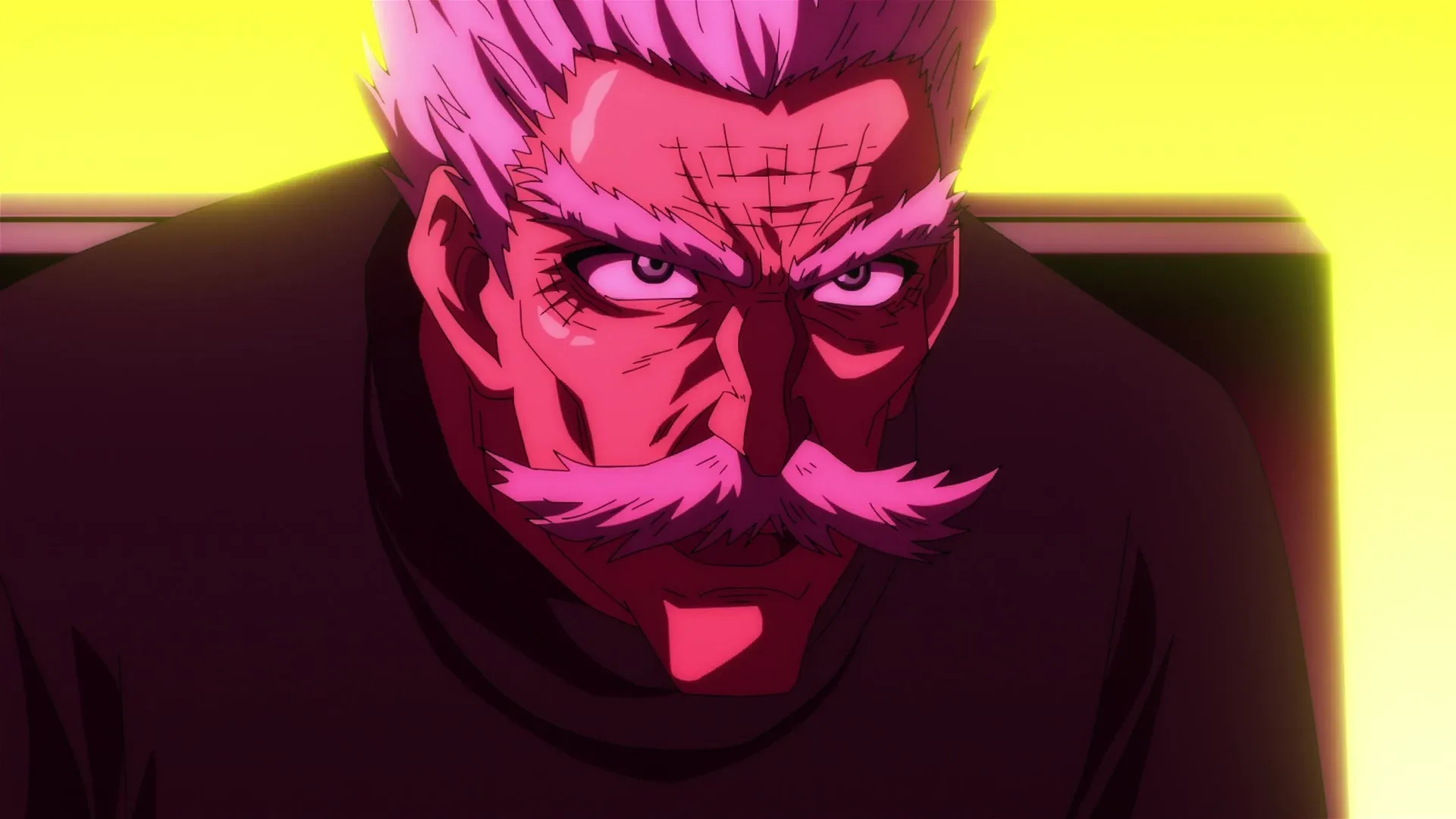
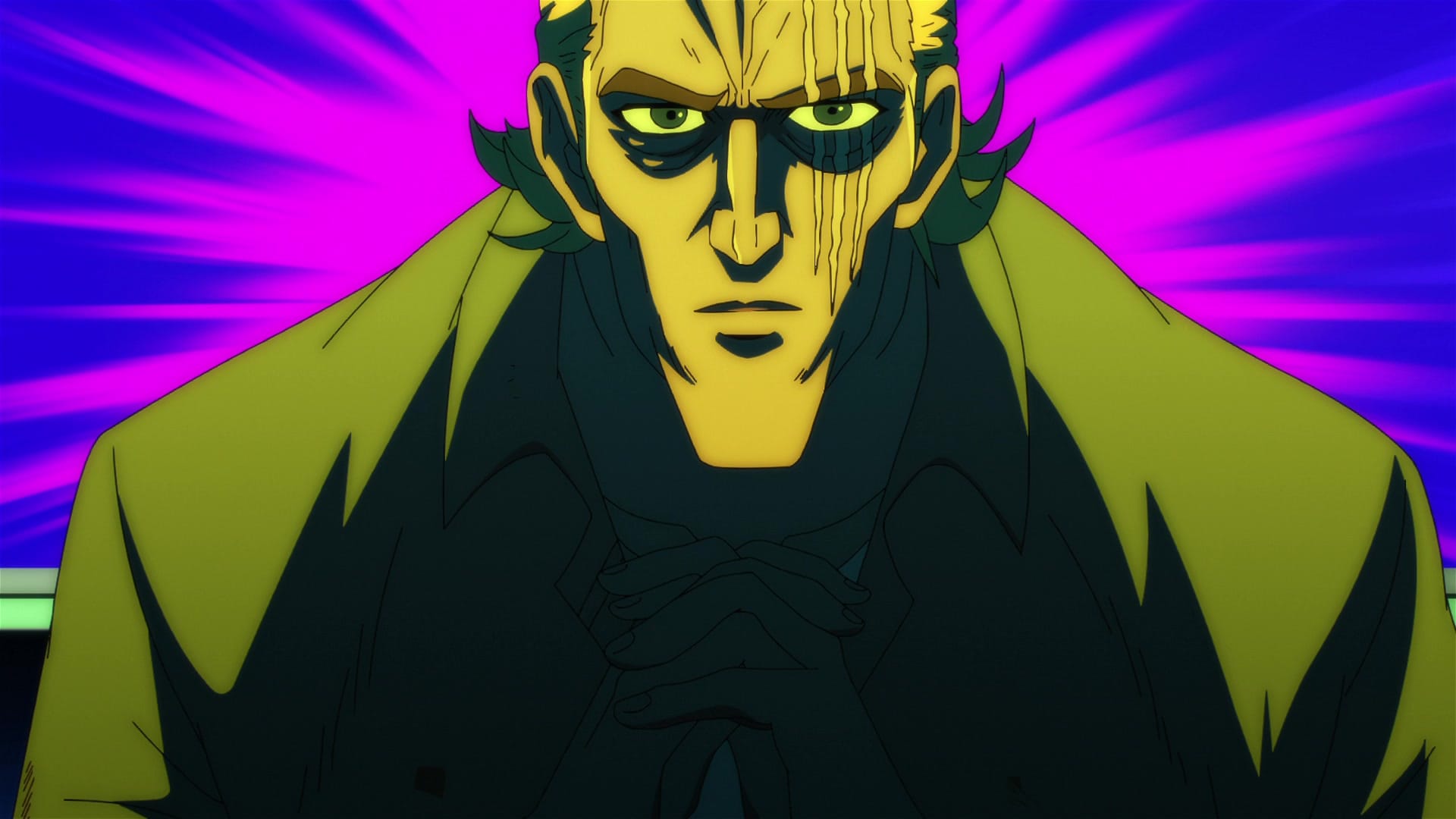
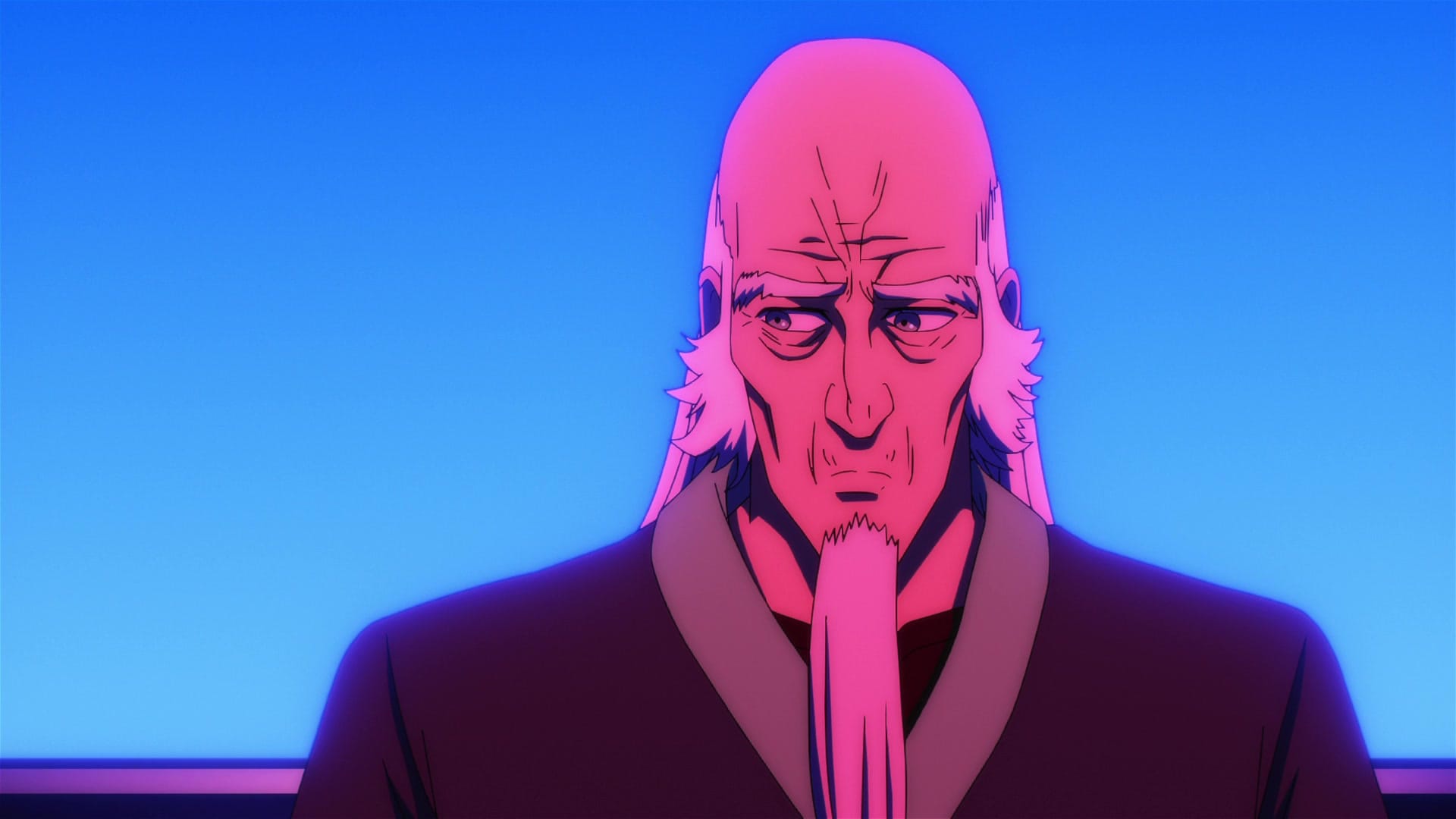
©ONE, Yusuke Murata / Hero Association Headquarters
There are ways these colorful shots and rimlight situations can be used to enhance the visual expressions, or even be baked into the visual aesthetic of certain scenes, but One-Punch Man rarely finds a convincing use, instead opting to throw those shots in as pop colors in a series that doesn't have much of a pop aesthetic at any other point. It's a bold aesthetic choice, but it's overcooked to the point that it's basically charred.
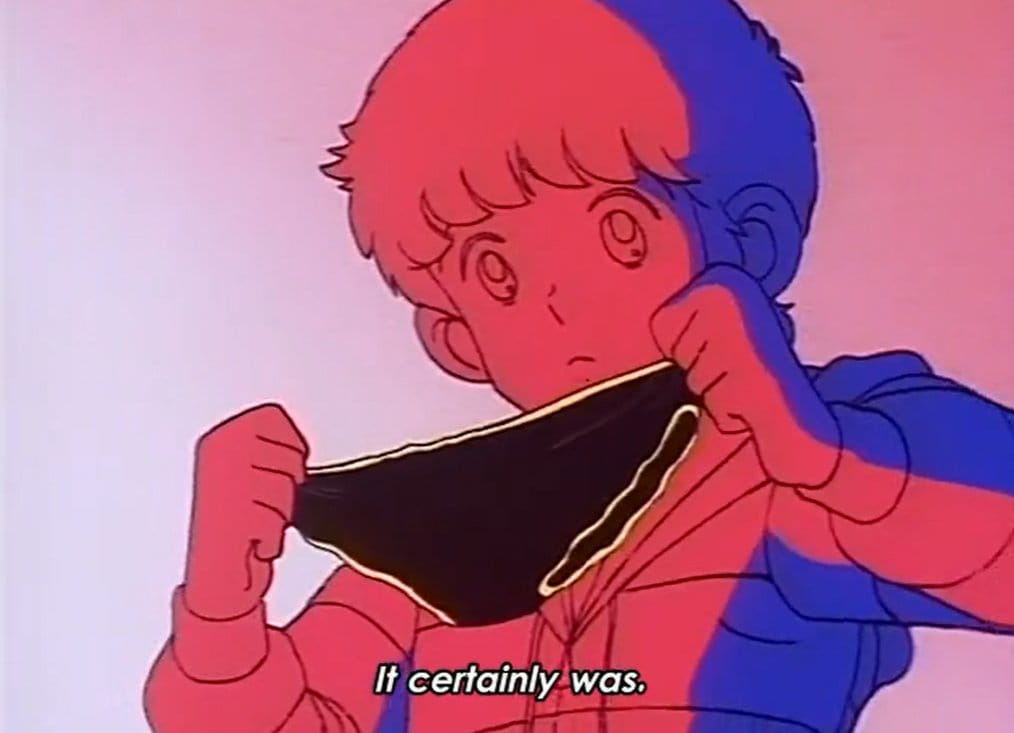
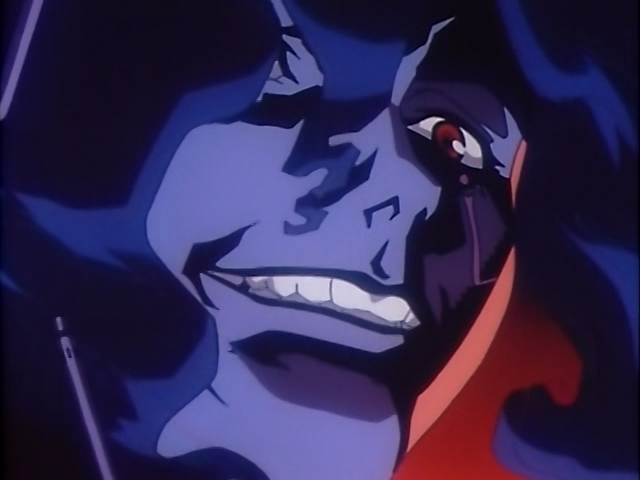
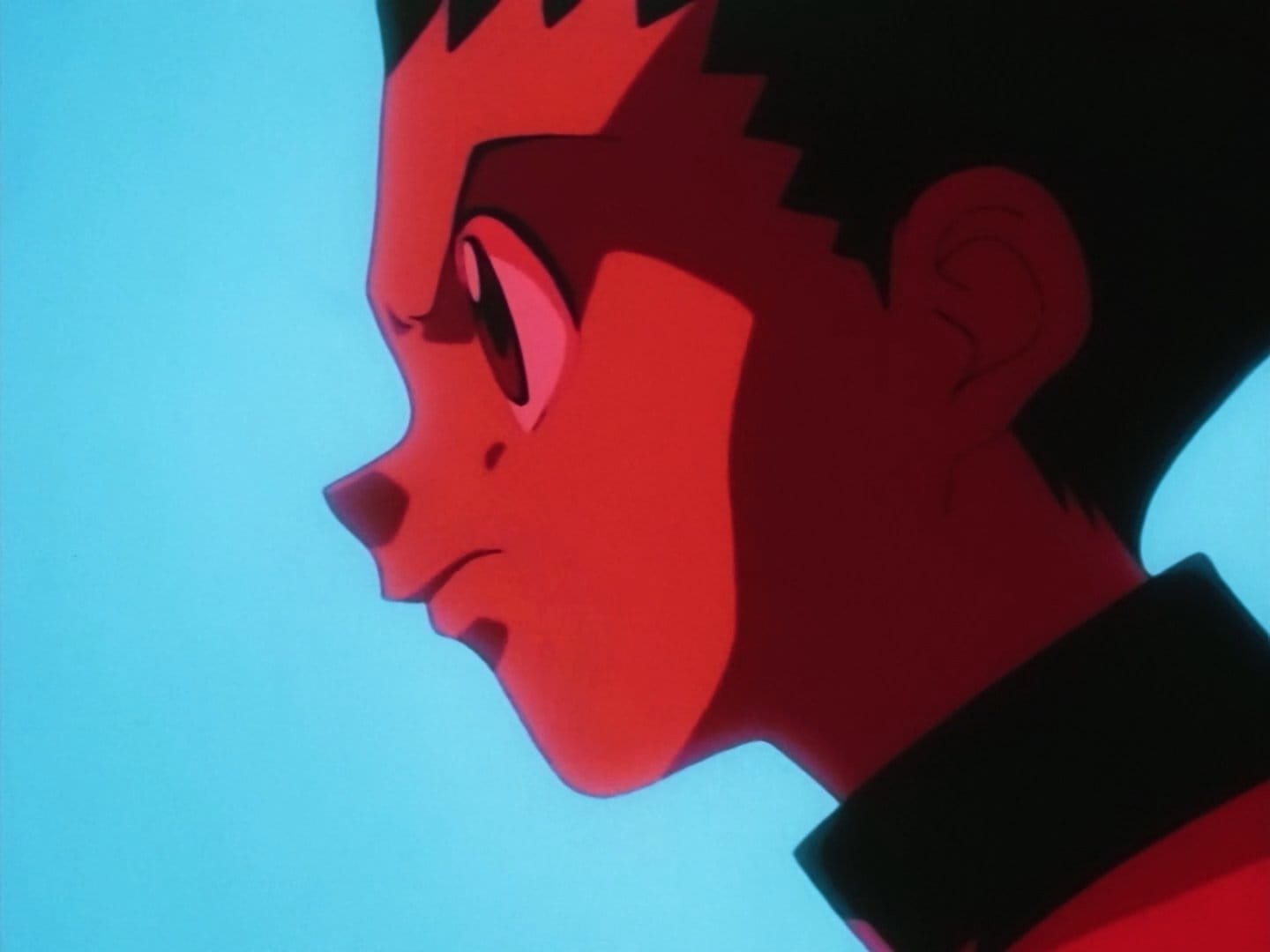
Miyuki (1984; ©Mitsuru Adachi / Shogakukan, Kitty, Fuji TV); Platinumhugen Ordian (2000; ©2000 Plum / Ordian Production Committee); Hunter x Hunter (1999; ©Nippon Animation / Shueisha)
Resources and Animation
The first four episodes have decent-quality artwork even though they don't move much. The layouts are fine and the animation supervision is pretty good. Issues persist, primarily in the boring storyboarding and #3 being noticeably lower quality than the others in this section, but the show wasn't completely melting. These episodes are personally inoffensive besides the bland presentation. I had hope this meant the show would look "okay" or even "good" with resources being thrown where it mattered.
Unfortunately, those hopes died a little with #5. Producer Matsui's comments make it clear that the staff at least intended for the episode to be something more, but so much of the work ends up being butchered through the animation process that it's a fraction of their ambition. Orochi has a couple of nice drawings, but they barely move; and his fight with Garou is a melting mess of roughly drawn, meat-grinded pictures and frames.
After that, the series goes back and forth between interesting episodes and the worst episodes of the entire series. #6, #7, and #10 are all pretty bad, not only having all of the prior issues, but also having bad drawings, issues with layout artists not drawing past the cel frame borders and those issues making it beyond the composite stage, some noticeable animation errors, and the like.

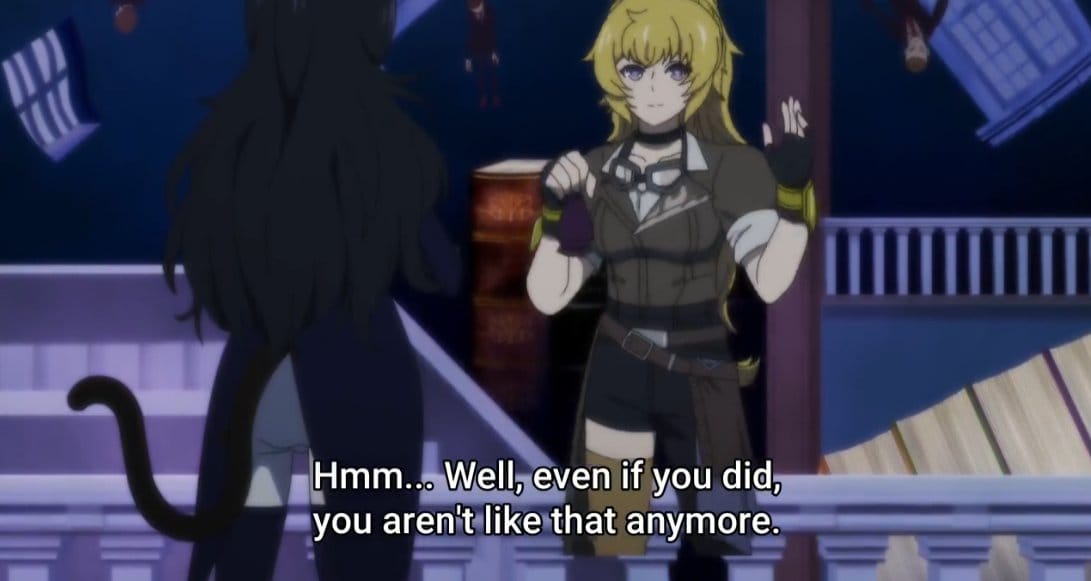
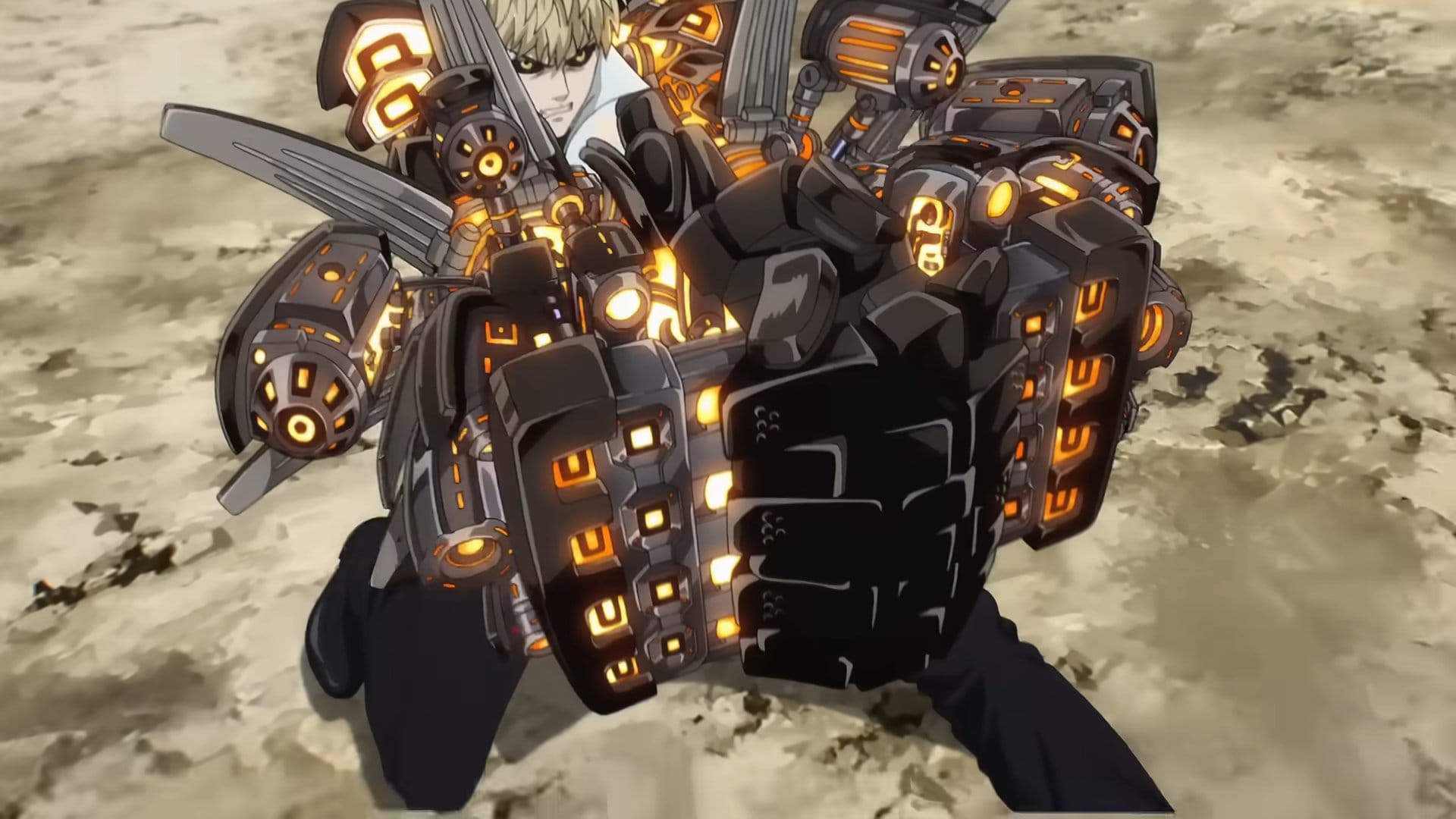
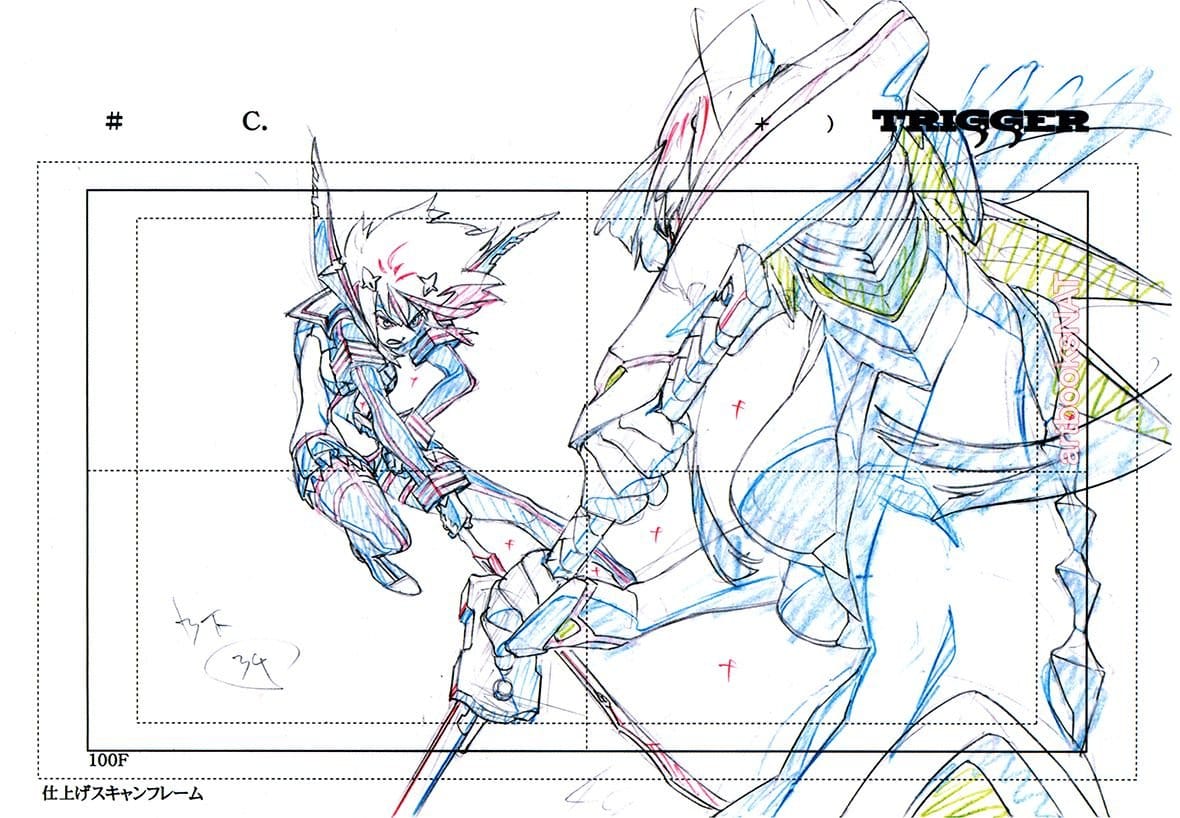
A screenshot of One-Punch Man #6 in which the top of Atomic Samurai's hair is partially cut off, edited to increase the brightness of the scene so that the hair is more visible. This is a more common mistake that is usually caught. The animator is meant to extend their drawing on the layout page beyond the borders of the cel frame so that issues in compositing (i.e., for panning, which this specific shot is a pan-up) don't arise from an incomplete drawing. A similar issue can be seen in RWBY: Ice Queendom #9 (later corrected in the BD version), as well as One-Punch Man Season 1 for a single frame during a fast-action shaky cam sequence (also corrected in the BD version). The Season 3 example is a more prominent mistake and therefore a much bigger issue, but it's easy to see how something like it can get through. This can be delt with by getting the drawing corrected, or by the compositor and episode director changing the way the pan is presented. Finally, the last image is an example from Kill la Kill showing a layout drawing in which the drawing itself extends well beyond the frame borders. Part of the reason for drawing beyond the border is also for form consistency.
#8-9 and #11-12 were able to get a slightly more focused production period where the staff's abilities shine through. #8 goes all-out using 3DCG for an action segment that, although unpolished, shows the staff's ambition. #9 puts together a fascinating hand-drawn mecha action piece. #11 is rough, but its main action segment is halfway decent through both the 2D and 3D staff's efforts (who also, unfortunately, couldn't finish all of their work for the episode on time). #12 is a little divisive amongst the audience, but I liked the action segments there too.
Directors need to take into account the circumstances that a series has or will go through. Storyboarding a larger number of cuts means more manpower and work for every department. More movement and more complex angles often need more resources and time, there aren't a ton of action specialists constantly free and waiting to be picked up like hitchhikers, after all.
Shin Oonuma discussed this concept in a 2007 interview with Tamon Creative, where he talked about an ambitious two-minute-long oner featured in Negima!? #14 (2006; SHAFT) key animated by Genichirou Abe. Oonuma, who was the show's assistant director and the episode's director, said the scene was made that way because he knew Abe was around and that they could allocate time for Abe to make that cut. Without Abe's talent and without the time allocation, the scene would've been approached differently. These ideas extend to other departments and to series directing, too.
Genichirou Abe's work on Negima!? #14. ©Ken Akamatsu, Kodansha / Kanto Magica Association, TV Tokyo
In One-Punch Man's context, these resource limitations are why animators like Kenichirou Aoki and Shuuto Fujita, both in-house J.C.STAFF animators, are placed on specific scenes or called to help for certain segments and cuts. The staff and director have to broadly manage where episode and scene priorities lie and where they can get away with dedicated artists putting in extra work. They don't have enough talented artists on emergency standby, so they have to pick and choose their battles. Therein lies the primary animation problem.
The solution isn't to "just hire Yutaka Nakamura and Vincent Chansard and [a bunch of other big name animators]", because with One-Punch Man's schedule in mind, they may not be available to work on it at all; and if they were, they may only be able to contribute LO (layouts) for a handful of cuts on a single episode; and if they can only contribute LO, that means another artist (pray it's a skilled artist) has to be available to clean-up their work based on those LOs; and they can't just be a good artist, they also have to be a fast artist capable of meeting both the schedule and the LO's ambitions.
These logistics are why My Hero Academia Season 5 (2021; Bones) did not use Chansard's LO animation: its resource intensity did not align with the schedule and artists they had on hand, so it was more reasonable for the staff to have a strong artist completely redo the scene with simpler presentation. It's also why situations like Blue Lock arise where a LO animator draws a lot of animation, but the on-site staff decide to vastly simplify it so it's more feasible to actually draw and make good-looking with the burdened schedule they have.
Still, One-Punch Man doesn't need guest animators like Nakamura or Chansard to submit LO-only work for segments of an episode; the show needs dedicated staff on rotation, meaning artists who can dedicate their time and work within the limitations of the project.
The Committee and the Studio
Jujutsu Kaisen's second season (MAPPA; 2023) is a big example of the production schedule leading to incomplete cuts and rough episodes despite a lineup of talented artists and directors. That show is a much higher production value series than One-Punch Man Season 3, but different end results and studio-specific problems don't mean they didn't have a shared fundamental grievance.
Jujutsu Kaisen had a bad schedule. Vaguely put, the committee and studio made decisions that led to a production site meltdown. When schedules are behind, and the animation is still in dire need of lots of corrections and oversight, what MAPPA has is money and advantageous resources to pay people to either completely retake or correct a lot of cuts in a short time frame.
The idea is that certain staff are being compensated quite generously for some egregious last-minute work with a deadline of, say... tomorrow, or this afternoon. MAPPA has the connections and staff willing to take on last-minute jobs like this, as well as the money to properly remunerate them. To clarify: it's not really an issue of forced overwork so much as it's a process that is unnecessarily inefficient, but that's most of the industry to varying degrees anyway.
Jujutsu Kaisen Season 2 seems to have survived because of heavy subcontracting and corrections/retakes. Take a look at the credits and notice the exorbitant number of emergency (assistant) animation directors and the number of studios helping with douga and coloring. That comes at a significant cost (financially), but the series ultimately prevailed.
J.C.STAFF's circumstances are different. They don't have nearly as many connections with action specialists and neither season of One-Punch Man produced at J.C.STAFF was on the studio's so-called "action production line" (Kaoru Suzuki's team). Both seasons were handled by Fujishiro's team and they still turned out wildly differently from each other. Season 3 was produced six years after Season 2. Some staff got busy elsewhere and the director replacement may have caused animators originally meant to be involved to move on because of the instability of the schedule. They have bills to pay and without an employee contract, they have to find work elsewhere or they don't get paid.
Still, in-house talents like Aoki barely found time to participate in priority scenes. This is where J.C.STAFF, with its more limited resources, suffers: once those resources are shifted elsewhere, it's difficult to find more. The studio, busy with so many projects, can't mobilize part of the company and send emergency help. This is an issue that J.C.STAFF could partially fix by not having so many open productions at once (and investing more into their own projects), but the team on the specific series has no control over those circumstances.
Companies on production committees get a portion of the profit from the products that are sold. The animation production company, unless they're part of the committee, only gets a negotiated contract and budget. A company's "ranking" on the committee also implies what they get out of a project's financial success: the top committee member gets the most profit. With a contract budget, the studio has to plan costs accordingly, and issues on their side can expend that budget faster than desired. If a series gets delayed, the committee has to eat the costs that comes with that.
Not every production committee necessarily cares about the product or studio circumstances. Some see anime as solely promotional material for the manga or simply as a commercial product and not as its own artistic endeavor and may be unwilling to schedule in a way that would be beneficial to the series over a studio's inconveniences or mess-ups.
As a non-committee member of One-Punch Man, J.C.STAFF paying out of pocket isn't a financial burden they'd risk because they have no way of recuperating those costs through the series' success. It's not that Bandai Namco is giving the series pennies for a budget, just that the Band-Aids they'd need to buy to fix a lot of problems are probably more expensive than the baseline budget they've given.
[Note: For those interested, here's a 174-page Japanese language survey report from the Japan Fair Trade Commission on the conditions of anime companies with detail into the committee-studio relationships, why studios tend to take on so much work, and the hold committees can have on them.]
Rushing
At some point, series director Nagai was joined by Miyuki Ishida, who took on the role of assistant director (副監督) to help split some of his directing duties and make the series a little more manageable.
Ishida is one of J.C.STAFF's longest-employed in-house staf. She was part of the studio's coloring department for over 20 years, which saw her as the color designer for Cat Soup (2001), Toradora (2008), Maid Sama! (2010), and most recently Planet With (2018). She started directing episodes in 2015 and fully transitioned into directing by 2019. She's commonly entrusted with the first episodes of series, which is generally a big responsibility. Some examples: Mewlkedreamy (2020), Sugar Apple Fairy Tale (2023), Chillin' in Another World with Level 2 Super Cheat Powers (2024), The Do-Over Damsel Conquers the Dragon Emperor (2024), and The Stories of Girls Who Couldn't Be Magicians (2024).
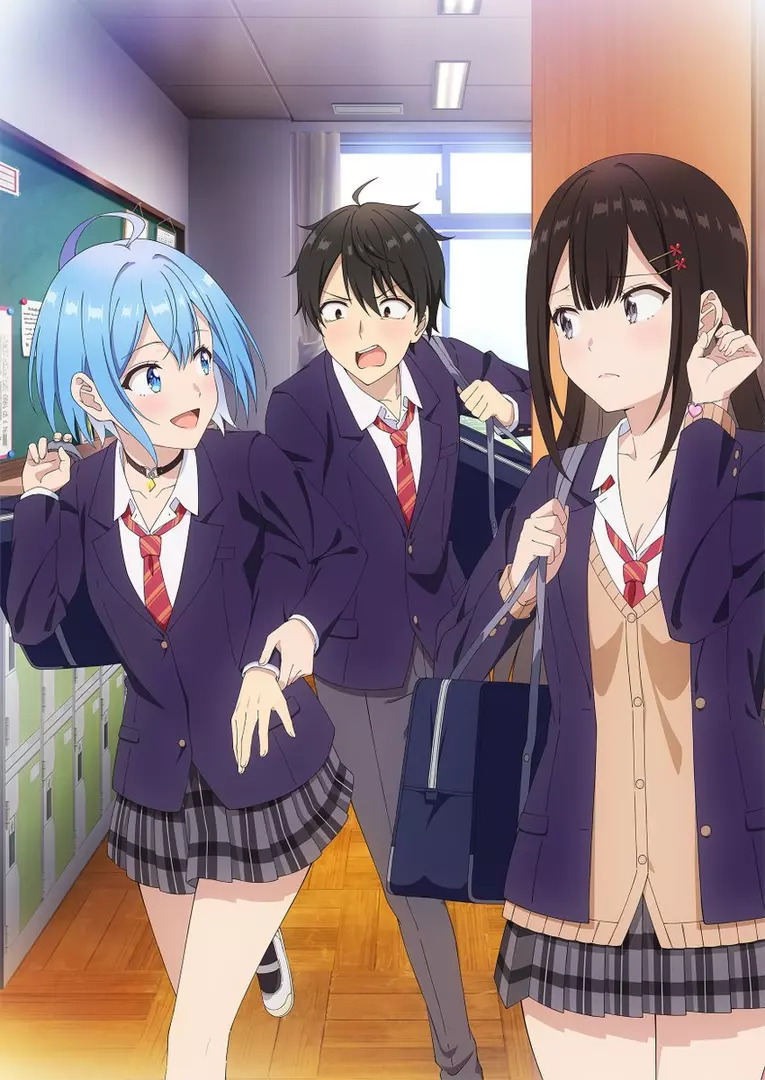
The problem presented by Ishida's appointment as assistant director is that she was already busy. Though Nagai boarded three episodes of Can a Boy-Girl Friendship Survive (2025; J.C.STAFF) earlier in the year or in 2024, Ishida was actively involved as an episode director (including having responsibility for the final episode) and as the series' assistant director. It was her first job as assistant director. Knowing the industry and J.C.STAFF's works, it's unlikely that production concluded far ahead of the broadcast.
Then, right after that show, she was in charge of One-Punch Man's first episode as the episode director. Three episodes into the series and she received the "assistant director" credit. According to One-Punch Man's broadcast schedule and credits, and Boy-Girl's broadcast schedule, it's possible Ishida didn't join the One-Punch Man team until late June or early July... lest she joined even later. She was also episode director for #8's B-part and directed #11. Season 3 also isn't Ishida's first time working on One-Punch Man as she previously was one of the episode directors for Season 2 #4.
Let's briefly talk about some other staff members.
Shuuji Miyazaki co-directed #3 and directed #7. Miyazaki's #7 is probably one of the weakest episodes of his career, which is doubly disappointing since he was given responsibility of Season 2 #1 and #8, making him another name familiar with One-Punch Man. Though his modern works are far from his prime, Miyazaki's recent output like Reign of the Seven Spellblades #1 (2023; J.C.STAFF) show that he's still a capable director.
Season 3 #5, the most disappointing of this season as far as pure potential, was directed by veteran Makoto Sokuza, another returning staff member who was a co-episode director on Season 2 #4 and #12. Lately, he can be found directing for shows like Beastars (2026; Orange) and Clevatess (2025; Lay-duce) as well.
Season 2 #5 co-director Kouzou Kaihou was put in charge of Season 3 #9, the episode storyboarded by effects and mecha specialist Takashi Hashimoto. Kaihou, formerly from J.C.STAFF's photography department, has exemplified himself on episodes of DanMachi (2022; J.C.STAFF), Reign of the Seven Spellblades, and Honey Lemon Soda (2025; J.C.STAFF); and at the moment, he's the solely-credited unit director for the first upcoming Patlabor EZY film.
The point of all of that is to say it's not like the series was being thrown at staff who hadn't worked on the series before or were bad at their work. Other new and unmentioned faces showed up to help and direct episodes too, but few had a chance to show what they could do regardless of their past familiarity with the work.
Nagai was only involved as an episode director on #8, of which his specific role is a mystery. Tetsurou Tanaka and Ishida are thought to have split the A- and B-parts (Tanaka, formerly associated with J.C.STAFF's CG department, handled the action-heavy portion of the episode), which leaves Nagai in some sort of supporting role handling miscellaneous tasks or further splitting their work somehow. Nagai has at least directed one episode for every other series he's directed or been an assistant director to thus far, but he only helped with one episode this time, so the basic implication is that he didn't have time to.
It's not uncommon for series to be finishing up in the days before they're due at the broadcasting stations (days to a week before they air), and we know One-Punch Man Season 3 is a show produced in those circumstances through an unfortunately kept-in clapboard frame in #8 showing an individual cut's finished date (at the photography/compositing stage). While this was presumed to be the case from the start, the frame is confirmation.
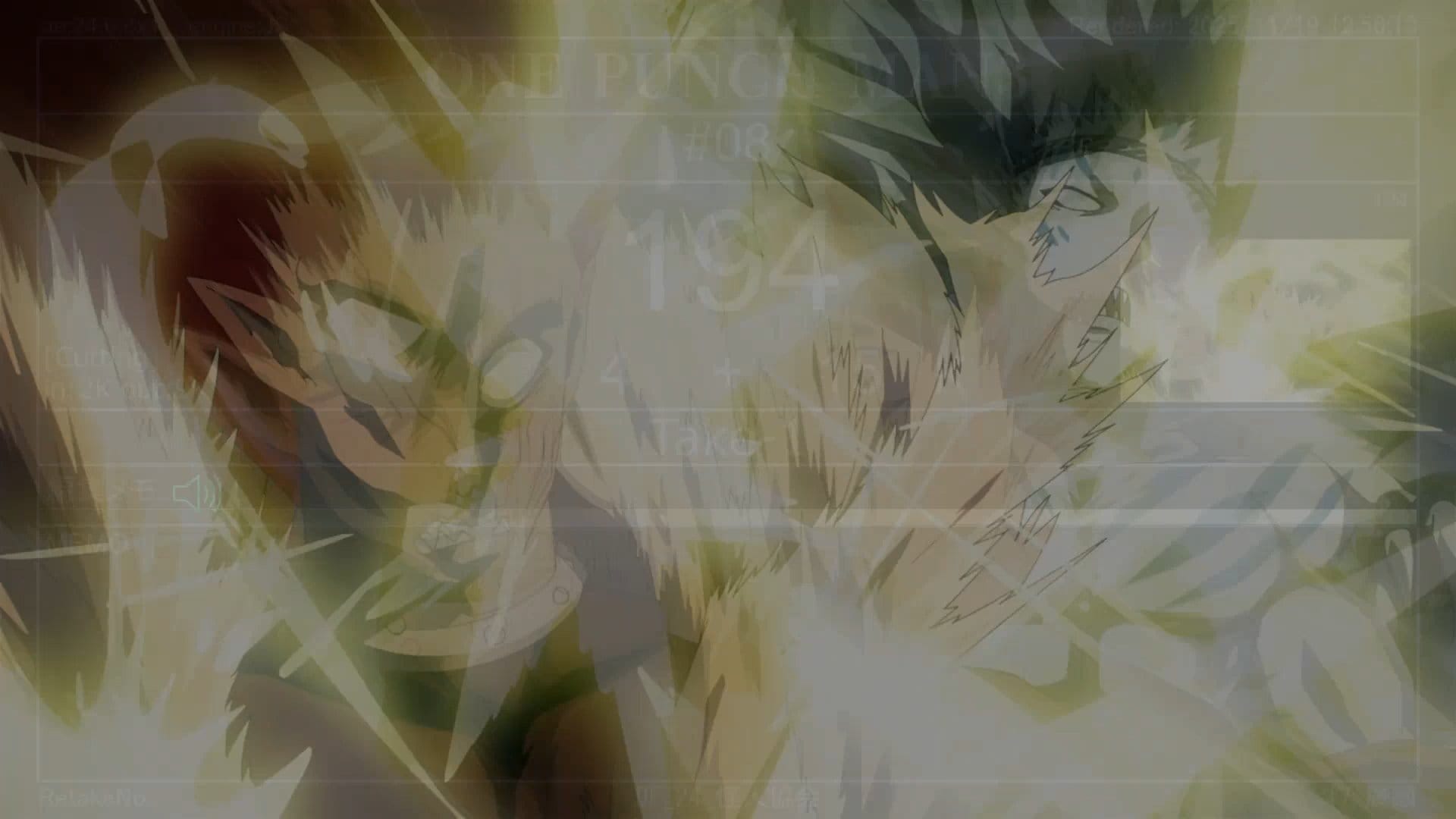
This frame making it into the broadcast probably isn't a "cry for help" or incompetence from any staff member. It's an easy frame to miss. ftLoic, a compositing artist and one of the names behind KeyFrameStaff List, noted that this frame was likely cut out properly (and thus wouldn't show up if it was rendered as a standard cut), but that the dimming/ghosting tools used to meet Japan's TV regulations pull from previous frames in the timeline composition of the software they're using. He provides another example of this happening in Naruto: Shippuden (2007; Pierrot) more than a decade ago.
Aoki participated in #10 as the "action animation director" but some of his corrections didn't make it in time to be included in the broadcasted episode. It can be assumed that this happened a lot on the series. RWBY: Ice Queendom (2022; SHAFT) had the same issue as corrections by the chief animation directors were posted on X/Twitter despite said corrections not making it into the TV broadcasts (they later made it into the "Final Cut"/BD version).
Something like Puella Magi Madoka Magica, which series director Yukihiro Miyamoto joined around August or September of 2010 (broadcast was January 2011), turned out better than One-Punch Man despite being a rushed mess itself.
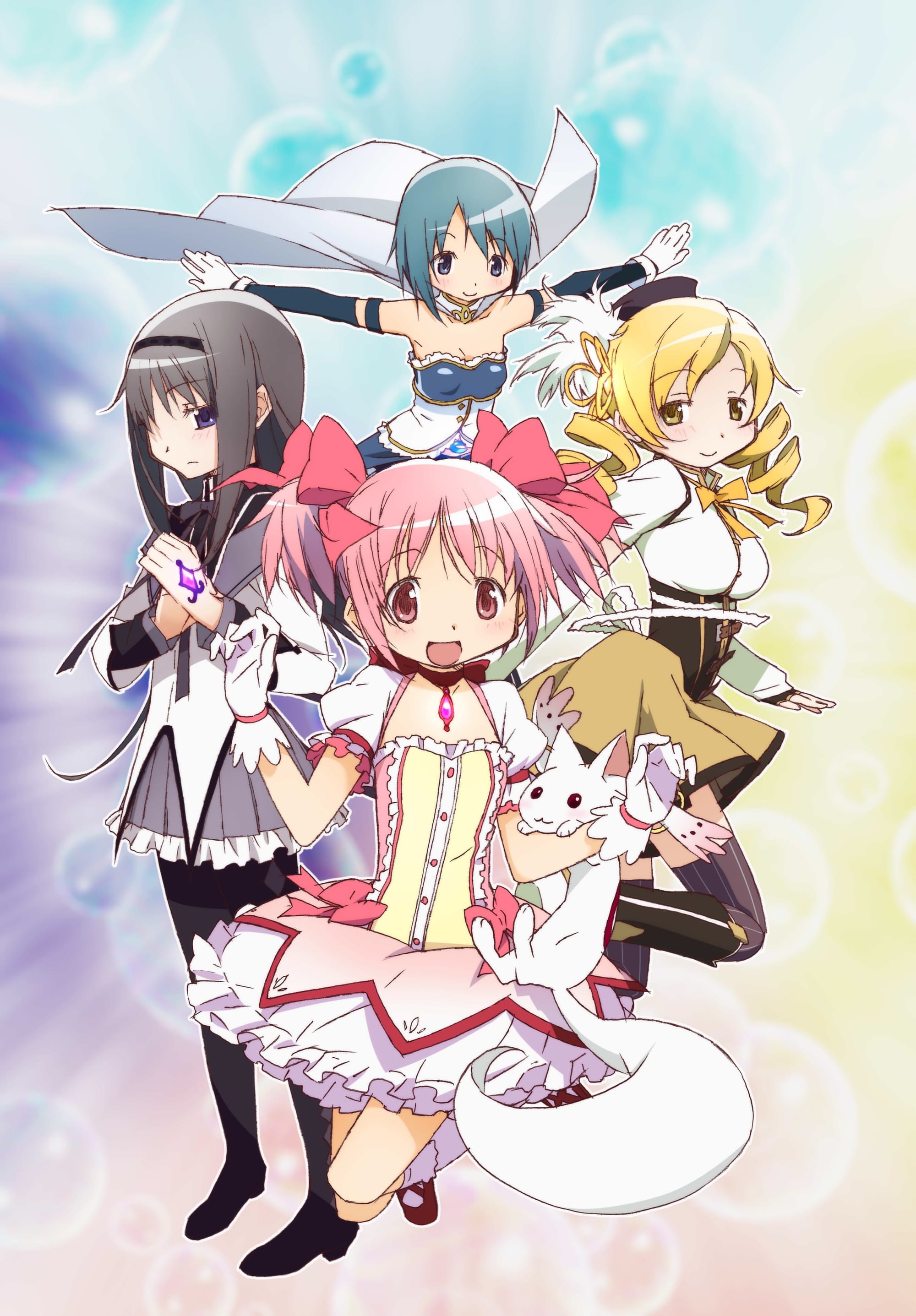
Madoka Magica turned out "good" because animation producer Tadao Iwaki and production desk Yasuhiro Okada worked to make the show's schedule manageable for the in-house staff by negotiating a considerable number of outsourced episodes to reliable studios they knew.
The schedule was by no means suddenly a luxury, but it allowed for in-house episodes to receive true priority focus. SHAFT only produced five episodes of Madoka in-house. Every other episode was planned to be totally or partially outsourced to a different studio.
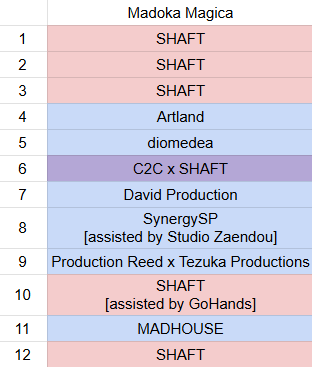
Most of the gross outsourcing studios also weren't usual subcontractors; many of them were primary contracting studios like MADHOUSE, David Production, and Artland. These were strong primary contractors with the staff capable of meeting a single episode's deadline and capable of doing much of the effort themselves without needing to subcontract different pieces of the work to a ton of different studios.
Series director Miyamoto also wasn't given the task of starting pre-production by September 2010. Most of the work in that regard had been ongoing with the main staff and a director already at the helm. Certain aspects and details still needed to be revised and finalized and continued into the show's production, but Miyamoto's task was focused on the animation production itself. He didn't need to do script checks or bother himself with the storyboard process.
Compare that with Shinpei Nagai's rush job for One-Punch Man. He didn't just do Miyamoto's job, he had to do everything Miyamoto didn't do, too.
Logistics
A rough breakdown of the outsourcing situation for One-Punch Man:
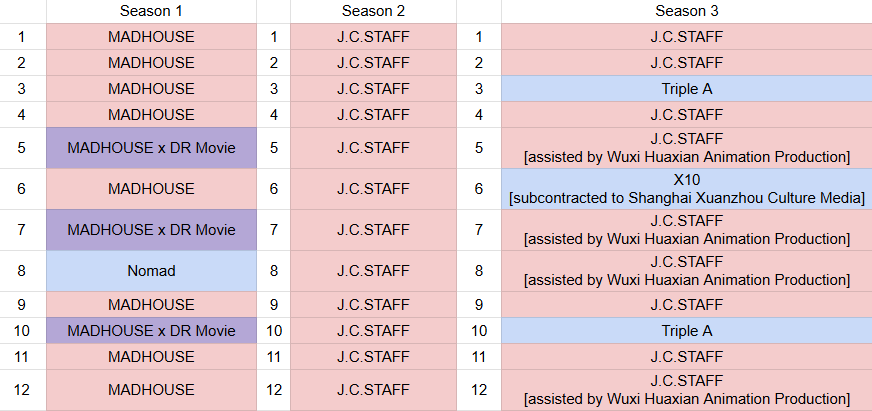
This is a pretty uninteresting gross outsourcing list. For Season 3: three outsourced episodes and nine produced in-house (does not mean no subcontracting); of those nine, four had significant animation assistance from an overseas subcontractor.
X10 outsources all of the work to a partnered Chinese studio, and Triple A basically does the same but to multiple studios (side note: they're also the parent company of studio C2C). Neither company is especially well-connected to the kind of staff necessary for this series, and since they subcontract most of the work anyway, it doesn't really matter.
In contrast, every episode of Season 2 was produced in-house. There was still subcontracting (like the numerous LAN Studio-contracted key animators who showed up later in the season), but no episodes were fully or partially gross outsourced. Considerably different circumstances and needs. Season 1 was mostly produced in-house with three episodes having support from Korean partner DR Movie (uncredited, but their PAs received credit), with a single episode (#8) outsourced to studio Nomad. Proper planning goes a long way.
An early 2010s Mechademia piece titled Working Conditions of Animators: The Real Face of the Japanese Animation Industry by JAniCA member Daisuke Okeda and Dentsu producer Aki Koike noted that committees prefer subcontracting work to South Korean and Chinese studios because of their ability to finish 3,000 cuts of douga (in-between/trace) in just a few days and at half the cost of domestic subcontracting studios. With new technology, materials can be sent from one country to another online instead of needing to physically ship materials (the main issue with Yuuki Kinoshita's Musashi Gundoh, or so the story goes), but on One-Punch Man there's little time for corrections as Aoki's comments exemplified.
A layout on some episodes of One-Punch Man can start at one studio, end up at another studio for the clean-up/2nd key animation, and end up at another studio for the animation director's corrections. Repeat that same idea for the in-between/trace process (douga -> douga check -> douga retake if necessary) and coloring process, now you have maybe a cut of animation. Now do that for 250 or so cuts. That's a lot of people and time.
It's not surprising that instructions, intentions, and drawings might be misinterpreted or "butchered" as material is flowing to and from so many different studios and with different languages at play. The heads of overseas studios and others more than likely speak at least some Japanese, but not everyone who is working with them is guaranteed to. This is also part of the logistical issues that can arise, and a lack of communication between studios or staff because of physical location and language barriers can put cracks in the production stability. Royal Ripper suddenly growing a pair of breasts in #3 may be the result of some sort of design miscommunication from an animator who has never read One-Punch Man, and which simply wasn't caught by staff, or it's an honest mistake of someone not paying attention and making bad drawings that that no one noticed.
Mizuki has six fingers for a single frame and three breasts in one of the later episodes, too. Relatively common issues. Just last year, a well-known animator accidentally drew six fingers for a frame of One Piece (1999-; Toei Animation). Attack on Titan The Final Season (MAPPA; 2020) has a scene with what looks like a six-fingered baby Eren Jaeger too.
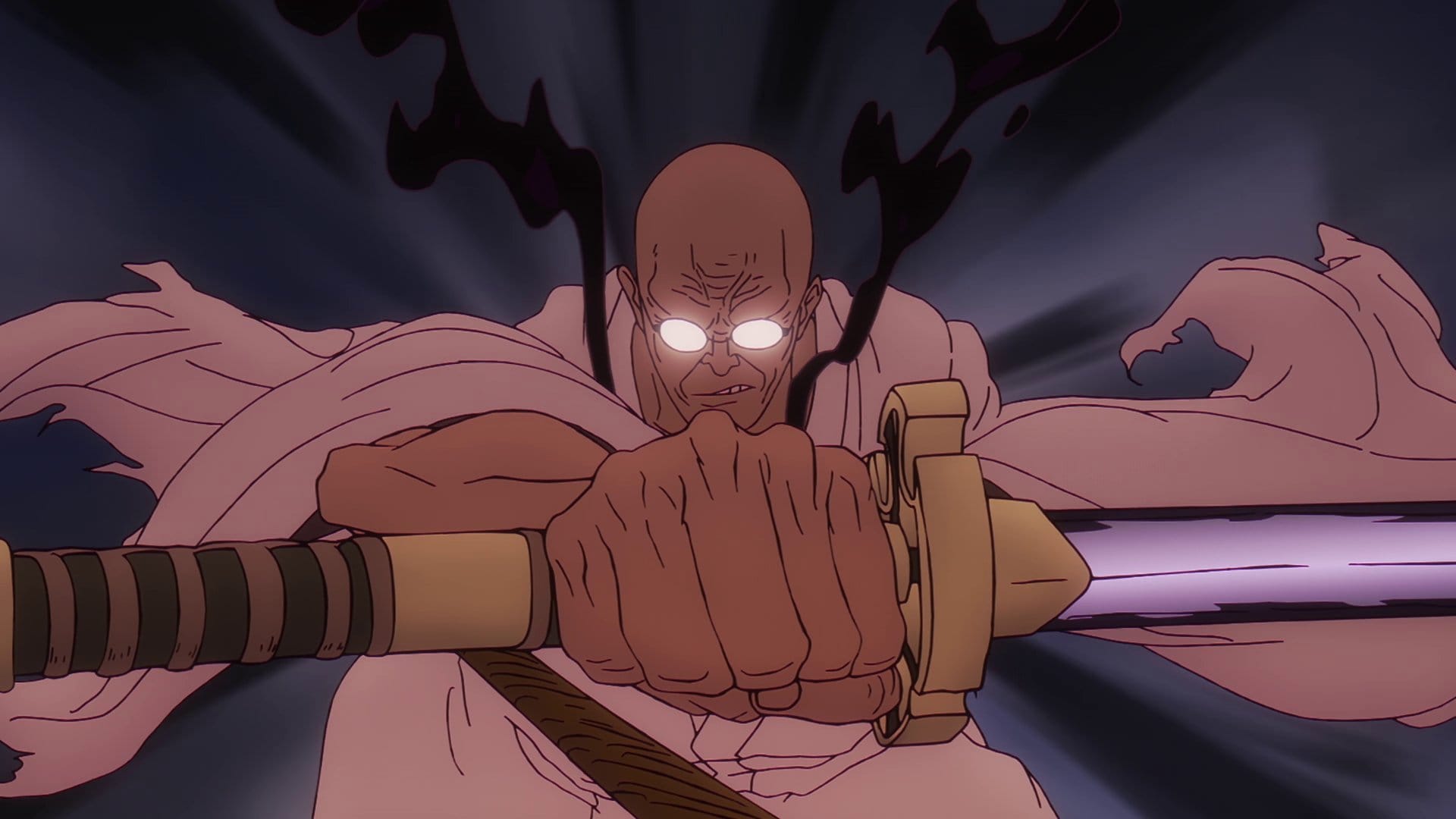
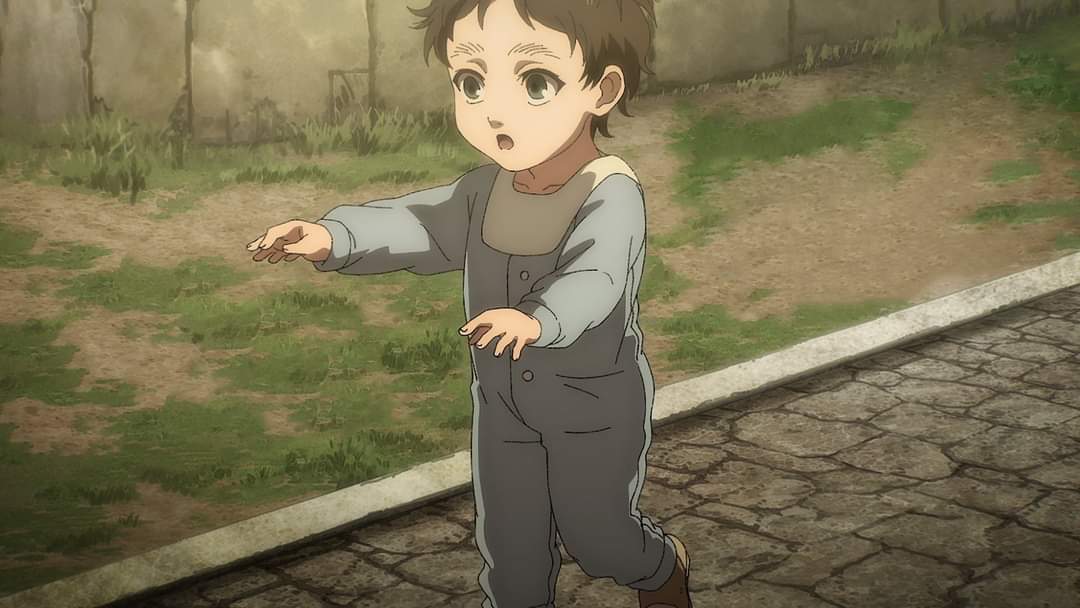
One Piece (© Eiichiro Oda / Shueisha, Toei Animation) / Attack on Titan The Final Season (© Hajime Isayama, Kodansha / ATTACK ON TITAN THE FINAL SEASON Production Committee)
These aren't wholly indications of AI-generated animation. Incorrect finger numbers can be a tell sometimes, but context in the animation and knowing about the animation production process matters (remember the accusations against Kenichi Kutsuna's Sekiro?), and it's always necessary to remember that human error is real and common among professionals and amateurs alike.
Yasuomi Umetsu said that the most professional and veteran animators still forget nuances or certain aspects of designs or how characters and objects move, and that it was his job (as director and animation director) to spot those errors. These errors range from the most minute issues in linework to a slide on a pistol drawn completely incorrectly. Bad or inconsistent art doesn't immediately imply generative AI, that discussion almost always requires more nuance.
Comparisons
I understand why fans want to compare every season of the show to its explosive first season, but that's a boring way of looking at the show and trying to understand why either of the currently released season look the way they do. Season 1 didn't look as good as it did "simply because it's MADHOUSE", nor is it because it had a higher budget, or even a particularly long production time.
MADHOUSE produced Police in a Pod (2022) and Trillion Game (2024), which are series that are far lower in production value than their version of One-Punch Man. The difference despite them both being MADHOUSE series? None of them are action series, but the real answer is that One-Punch Man's animation producer is Yuuichirou Fukushi. The other two are led primarily by Mariko Ashikawa.
Ashikawa's series are mostly outsourced to DR Movie. They're not inherently bad because they're outsourced to Korea, but they have a completely different resource pool compared to who Fukushi gathers. Even Season 1 is wildly unordinary for Fukushi's own work.
Many animators and other staff members connected to Fukushi and Natsume happened to be free for the project. Several animators from studio TRIGGER, later Mob Psycho 100 character designer Yoshimichi Kameda, and a whole plethora of others were able to regularly contribute and do more than just LOs. The schedule even aligned with Yutaka Nakamura's, who spends most of his time at studio Bones, and who appeared on the final episode under a pseudonym. Kameda, who worked on several episodes, likely wouldn't have had time for many (if any) appearances on a MADHOUSE-produced season 2 because he would've been busy with Mob Psycho's second season. That goes for a lot of these talented artists who showed up for season 1.
As for the budget? Long debunked by character designer Chikashi Kubota.
The logistics of animation production on generously standard budgets don't start and end at whether a studio has connections and what schedule they're on, it also has to do with the individual schedules of each animator. When people say that Season 1 was a miracle with the stars aligning, the idea is that there was an alignment of a lot of free animators willing to show up.
End
Bad art exists. There will be bad adaptations and bad anime for as long as animation exists as a medium, just as good artists sometimes create bad art, and bad artists still make bad art and will continue to do so. A lot of those bad art pieces are made in contexts that disadvantage the artists making it. We can hope that it won't happen to our favorites, and we can critique series endlessly when it does happen, but there's no gift or passion in "love" that becomes unruly hate.
It's good to talk about why art is both good and bad. In One-Punch Man Season 3's case, it's a lot of bad parts with some good. A huge part of art theory isn't focused on the art itself, but rather the process. Artists commonly talk about the process, and how that process affects the product. The process is important to the product and to the art. Not just the physical process of creating, but the mental process of why.
As for "part 2" of Season 3? Nagai might not have been a good choice of director for the series itself, but I think the show can find success if he stays. If he left and the studio doesn't have another director already willing to take on the show, then part 2 would probably just end up as a repeat of part 1. At least Nagai has experience with the worst of the worst and has an idea of what it's like to direct One-Punch Man. I wouldn't say Season 3 is really rock-bottom, there are definitely worse shows out there on subjective technical analyses, but I'd like to imagine Nagai can only improve from here, even if it's just a little bit.
My own selfishness wants to see Nagai's soul in the series, though. I'm interested in what he can do with the show on more of his own terms.
We'll just have to find out.