Interview: Decorado Director Alberto Vázquez
This May, the Decorado animated movie is coming to North America for the first time, bringing a dark, but important message to more viewers than ever. Some of our readers may have already seen the Spanish movie, which was directed by Alberto Vázquez and adapted from the 2016 short of the same title.
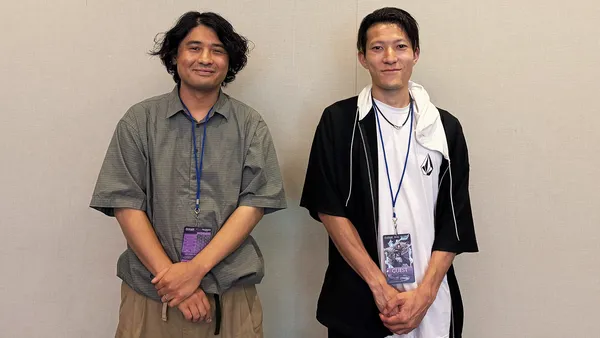
Decorado is Vázquez's newest film. The Spanish comic book artist, illustrator, and director is known for Birdboy: The Forgotten Children and Unicorn Wars and is among the top names in the European animation scene. We got to chat and discuss Decorado, its themes, creative struggles the characters face, and more.
Q: When was the idea of Decorado first born?
Vázquez: The idea started in 2012. It actually began as a comic strip, which was then adapted into a short of the same name, Decorado. It's black and white. You can watch it online still. And then there was talk of an adult series that never actually got off the ground. But all of the ideas and sort of plot lines that have been developed for that ended up in this film. So over the course of 14 years, that's how we got from there to here.
Q: The animated short was released in 2016, a decade ago. Obviously, the times have changed, but the message of Decorado appears to be as relevant as ever. What would you say were the biggest challenges you faced while “transitioning” the story to a new format and new release date?
Vázquez: Many things change because you obviously have to expand things, like plot and characters, and at the same time make it different. And also working on a short, that's six people maybe as the team, whereas to get to the feature, it's a team of 200, and your budget has multiplied by 20. But even though a lot of time passed between making the short and making the feature, the themes are still really universal. You have the financial crisis, this idea of mega corporations, and society's control over the individual. All of those things are universal. They're still very relevant today.
Q: Could you tell us a bit more about the animals you chose for the characters? Why a mouse, specifically, as the protagonist?
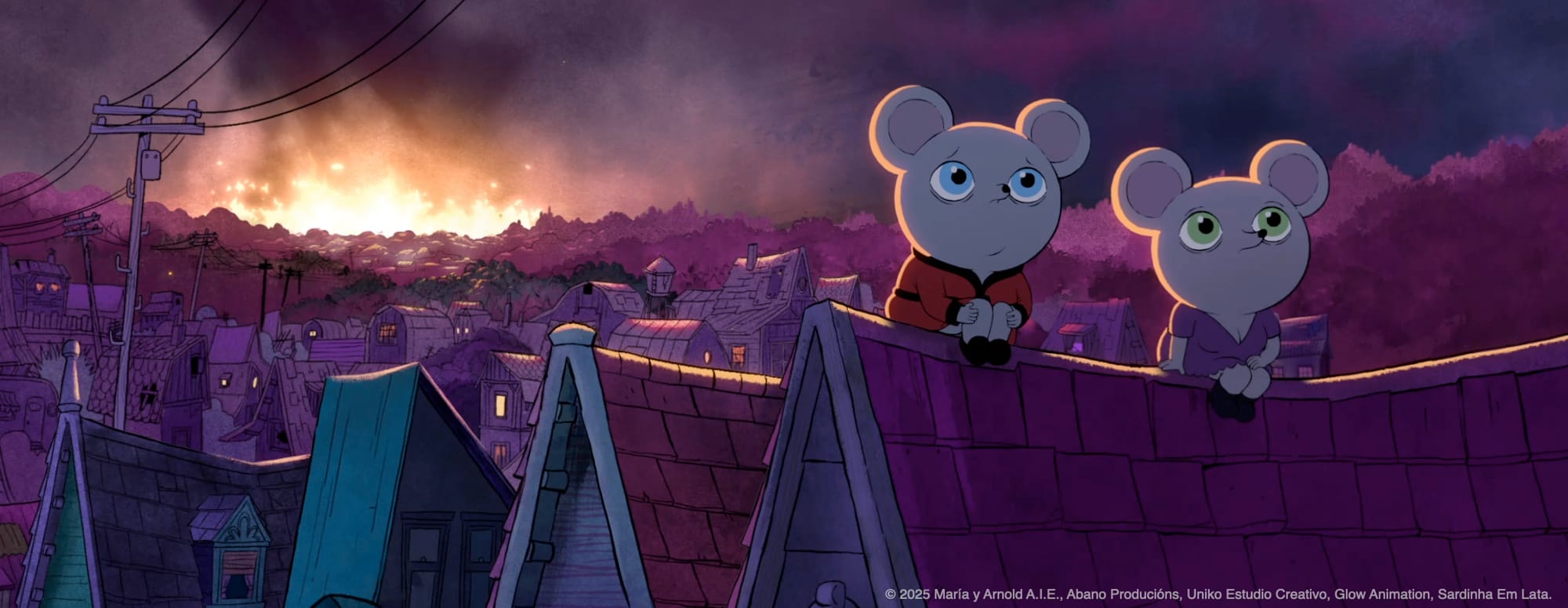
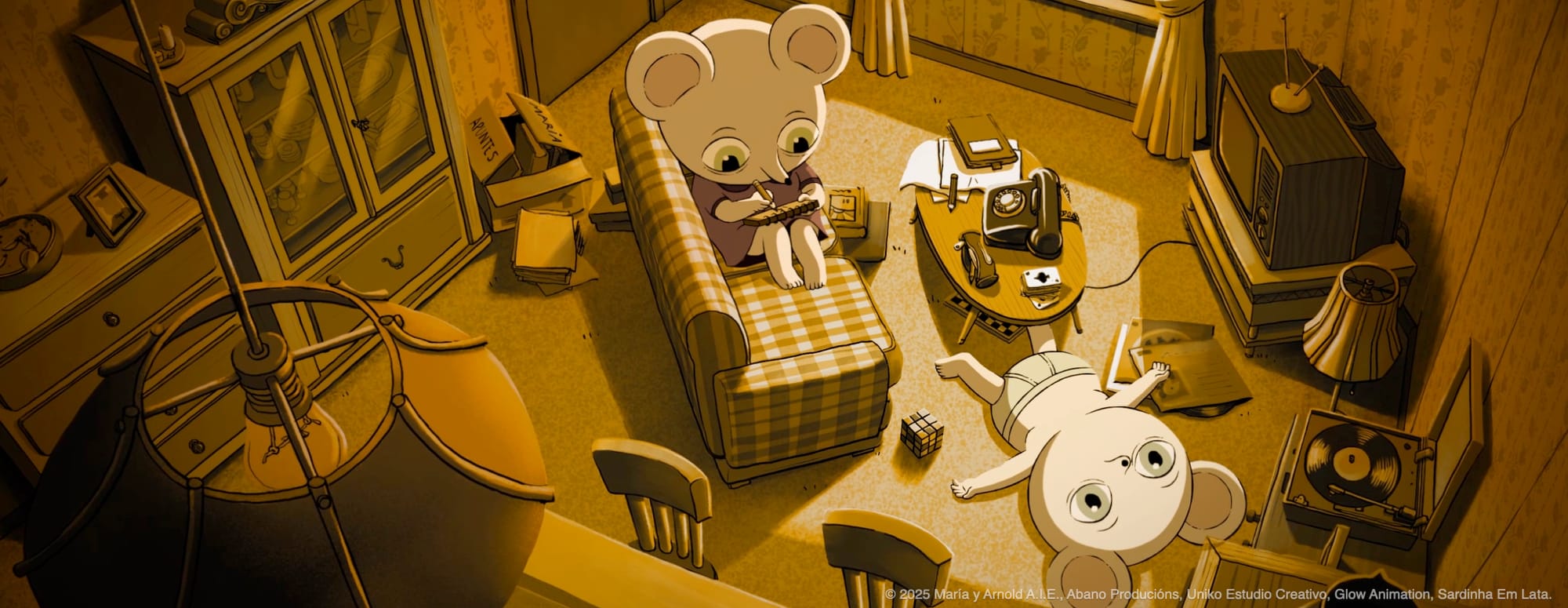
Vázquez: Well, Arnold is a mouse because he's sort of a reference to Mickey Mouse, and Maria is Minnie. But you know, they're older now. They maybe aren't quite as good-looking; they're going through some troubles. Some of the animals are also sort of a bit more generic, but some of them are very specific. You have the demon or the mermaid and the owl as well, and the mushroom people who are these sort of absurd, very submissive characters. It's sort of taking the idea of Disney, but making it really weird.
Q: Speaking of Maria, she is an important character who has gone through major changes when compared to the short, in which she was quite robotic. How did this come to be?
Vázquez: Yeah, Maria did change a lot. And there is a reason for that: what this film was trying to say is that it's real relationships that are going to save us. You know, our love for our friends and our family and our partners. So I thought that she couldn't really be the same as she was in the short. That's because Arnold needed a real companion, because otherwise he would have been completely alone. And so that's why I didn't want Maria to be as artificial as she was in the short.
Q: Speaking of Disney, I couldn’t help but notice that the Depression Fairy resembles Tinkerbell. Is this a representation of the struggle of an independent artist?
Vázquez: It's the classic imposter syndrome that a lot of artists suffer from, and that insecurity. There can be other problems that come with it, she mentions anxiety or depression. But I like having it be a fairy because it's sort of that classic character from Disney who's there to teach you a lesson or convey some morals. But in this case, she's sort of this gothic fairy who's acting in a very different way than Tinkerbell. And she's serving as that inner voice of Maria's.
Q: Do you have a favorite character in the movie, someone you really relate to?
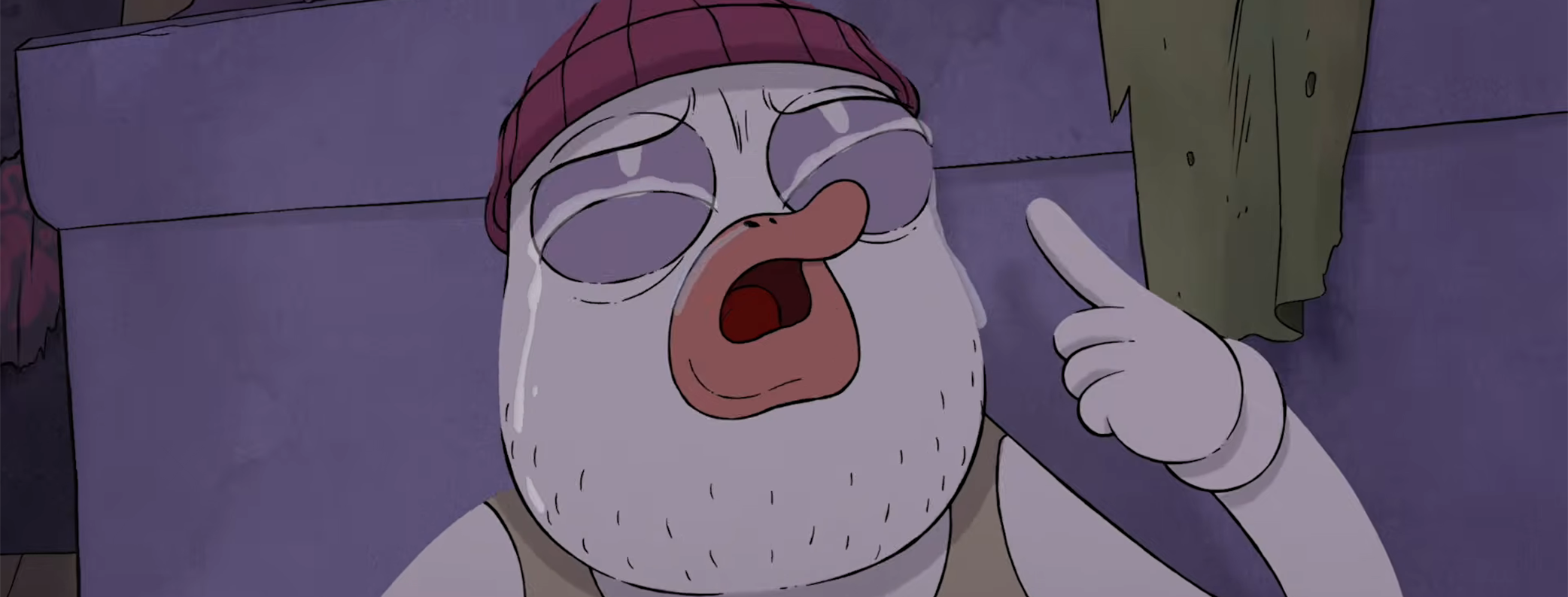
Vázquez: I like a lot of them, but I would say that Duck Roney is a particular favorite because he's sort of a parody of Donald Duck. We have this sort of contrast between what was and now how far he's fallen. Also, I did the voice for him, so I definitely love the character for that reason. The fact that he's a comic character adds a bit of levity to the film.
Q: One of the moments that I noticed resonated especially well with those who watched the trailer was: “It’s not a symptom of health to adjust to a sick society.” I feel like this is the overarching message of the movie. Do you have a favorite moment of your own?
Vázquez: I have a lot of favorites that I enjoy, but a particular favorite is the last scene, and how it ends. There's also the flashback scene that the Depression fairy narrates, in which we see the story of how Arnold leaves work so he can go take care of his father, and how that's told, and the colors that are used are a part that I particularly enjoy.
Q: Do you think the colors used in the movie added a bit to it because the original short was mainly black and white?
Vázquez: Yeah, we wanted to use color specifically for its narrative and expressive possibilities. And you'll notice that throughout the film, the colors sort of change with the characters' emotions. And yeah, we just wanted those possibilities for a longer film because we thought that black and white works great for a short, but having something that was longer, you know, we wanted to explore more of that.
Q: You started out as a comic book artist; do you think that affects your sense of pacing in animation and overall approach to animation?
Vázquez: Yeah, totally. I don't come from the animation industry, and that means that the way I do things is a little bit freer because I don't necessarily have to think about the market or about kids or about what you're supposed to do. So, I have a different approach, and comics are definitely freer because they're cheaper to produce. It's just you and a pen, a pencil. And so that allows me to make something that is a little bit different.
Q: You spoke previously about using animation to depict complex themes and bring them closer to younger audiences, especially. After Decorado, what is next for you?
Vázquez: Nothing, honestly. Just promoting this film and getting some rest and thinking about what I want to do next, whether it's a film or a book, or if it's just nothing and sitting around because creativity requires rest.
We'd like to thank Mr. Vázquez for taking the time to chat with us and present his newest work in such an engaging fashion. We wish him all the best in future endeavors!
Decorado arrives in North American cinemas on May 15. Tickets are now on sale.
Photo and images courtesy of GKIDS.